.jpg)
To find competitors' Facebook ads, start with the advertiser's real Page in Meta Ad Library, choose the country you care about, and set the status to Active ads. Then inspect the creative and its start date. The research becomes more useful when you record what changed and choose an original idea to test, rather than assuming a visible ad must be profitable.
This article was substantially updated on October 8, 2026. It uses the live Meta Ad Library and Denote extension controls checked that day. Meta describes its library as a way to search currently running ads by keyword or advertiser; its public coverage rules differ for ordinary ads, EU/UK ads, and political or issue ads. Check Meta's current Ad Library description before interpreting an older or missing result.
TL;DR
- Search by the competitor's Page, not just a broad product keyword, and confirm the Page belongs to the advertiser.
- Fix the country, ad category, and active-status settings before comparing results across weeks.
- Log the Library ID, start date, format, opening hook, offer, destination, and observation date for each ad worth tracking.
- Use the Denote extension's running-days, views, and estimated-spend filters to prioritize inspection. These values do not reveal the advertiser's conversions or ROAS.
- Revisit the same Pages weekly, record new creatives and changed messages, and turn one observation into a test with your own assets.
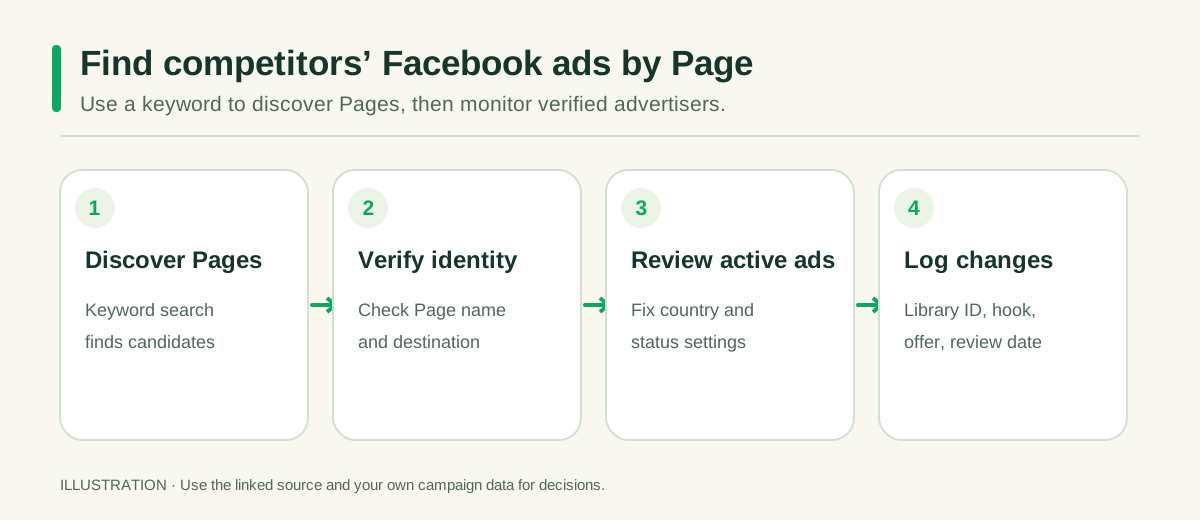
Illustration: keyword discovery helps find candidate Pages; a verified Page is the unit to monitor.
Find competitors' Facebook ads by the right Page
Open Meta Ad Library. Select the country or market relevant to your campaign, choose All ads, and search the competitor's name. When Meta offers both keyword results and Page results, choose the advertiser's Page. Verify its name and destination before treating the ads as that competitor's work. Large brands may have regional Pages; a similarly named reseller or fan Page can give you the wrong evidence.
Set Active ads if your question is “What are they showing now?” The card shows the ad's status, Library ID, and when it started running. Open See ad details to inspect the full creative, copy, call to action, platform indicators, and linked destination. A start date is a visible clue about an ad's history, not a log of every day or every country in which it was delivered.
If you do not yet know the advertisers in a category, start with a product or problem keyword. In the Netherlands ugc search we checked on October 8, 2026, the results mixed creators, software companies, communities, and unrelated uses of the letters “UGC.” Use a keyword search to discover candidate Pages, then switch to a verified Page search for competitor monitoring. Keep the country and query in your note so someone else can reproduce what you saw.
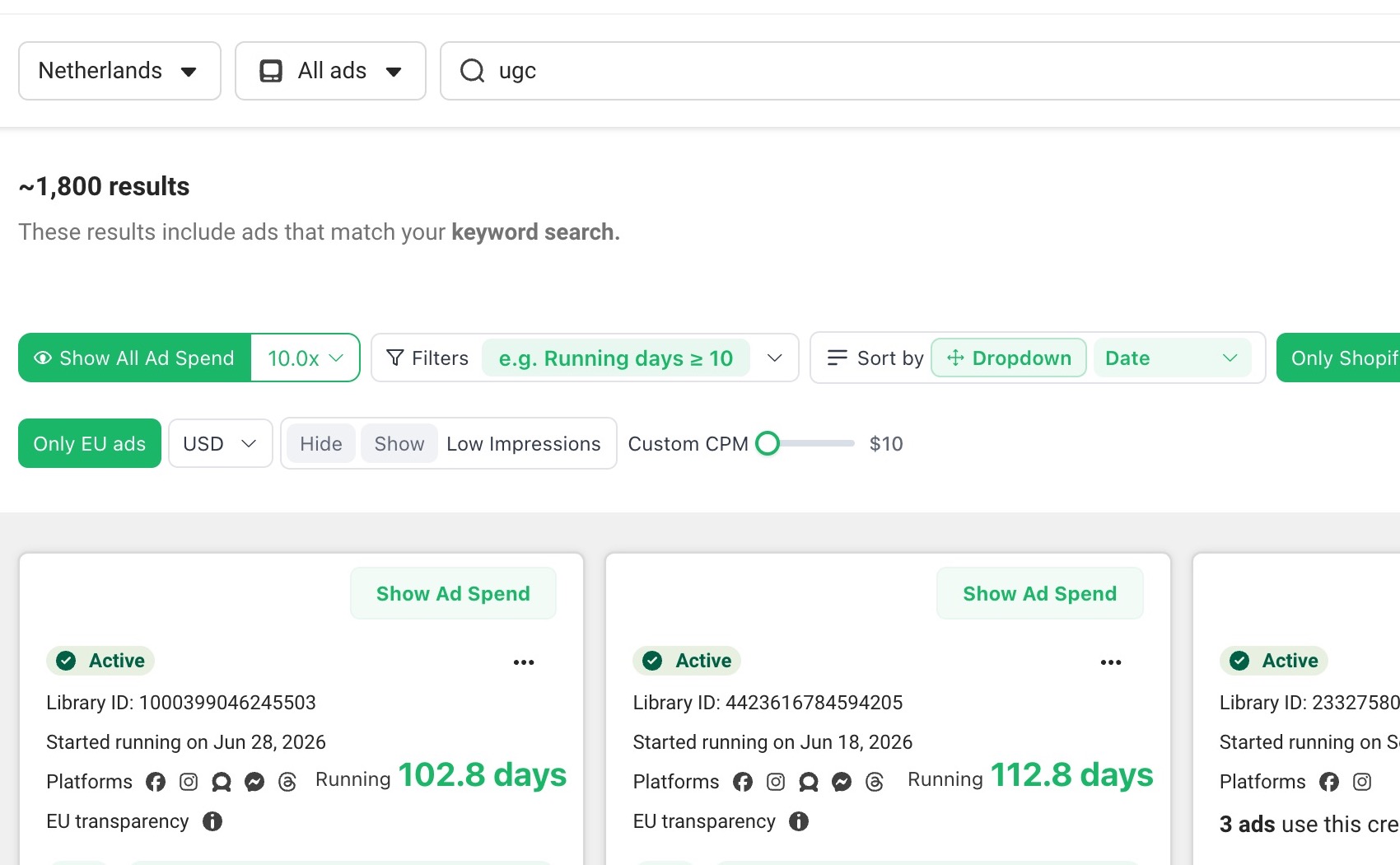
Product screenshot: Netherlands ugc keyword results in Meta Ad Library with the Denote extension, captured October 9, 2026. These are keyword results across Pages, not a verified competitor Page view.
When a brand has several Facebook Pages
A competitor may advertise through a main Page, a regional Page, or a product Page. Do not merge their results into one unexplained total. Keep a separate Page URL and country in the watchlist, then note which business or product each Page represents. If you find an ad by keyword, confirm the Page identity and landing destination before assigning it to the competitor. This is especially useful when researching resellers, franchises, or localized campaigns.
For a broader starting point, Denote Ad Spy and our competitor-ad research guide cover adjacent discovery tasks. Return to the official Page view for the weekly record described here.
Make a shortlist with Denote inside Meta Ad Library
The Denote Chrome extension adds research controls to the library page. In the interface checked on October 8, its filter menu contained Total Spend, Views, Running days, and Ad used. Its sort menu included Date, Total spend, Running days, Views, and Daily spend. The page also displayed Show All Ad Spend, Only EU ads, and Custom CPM. A given ad may not have every estimate, and some controls may require access to the extension.
Start with a question, then choose the control that helps answer it:
An ad visible for a long time may be worth inspecting, but longevity alone does not prove it performed well. The same applies to a high estimated spend or many views. Our guide to Denote's Ad Spend estimate explains why those figures are screening signals rather than verified competitor budgets.
Record a competitor ad so the next review is comparable
Save a small watchlist of direct and adjacent competitors. For each Page, record the country, active-status setting, query or Page URL, and review date. For each shortlisted ad, record the Library ID, start date, format, language, first scene, stated benefit, proof element, call to action, and destination. Add the visible Denote estimate only with its label and observation date.
Recheck the same scope the following week. Separate four events that often get blurred together:
- A new Library ID appears under the watched Page.
- An existing ad changes its visible creative, copy, or destination.
- A familiar message appears in another format or market.
- An ad no longer appears in your chosen filtered view.
The fourth observation is the weakest: a changed filter, country, status, entitlement, or source coverage may explain it. Do not write “the competitor stopped spending” without independent evidence. Denote's Track Ads Daily and Save to Denote controls, when available to your account, can help keep the review organized; verify the saved record before relying on it for a weekly comparison.
How to find new competitor ads without losing the comparison
Use the same Page and market settings on the next review. First compare Library IDs; a newly visible ID is a candidate for a new execution in your observed scope. Then compare the visible first scene, opening copy, offer, call to action, and landing destination. A familiar message in a different format may matter more than an entirely new thumbnail, because it suggests the team is exploring the same promise in another presentation.
Keep four columns separate: what was visible, what changed, your interpretation, and your next action. That prevents a plausible interpretation such as “they are testing a lower-friction offer” from being copied into the observation column as fact. If an ad disappears, record “not visible under these filters on this date.” Meta's Ad Library has different retention rules for ordinary ads and certain regulated categories, so disappearance is not a reliable budget conclusion.
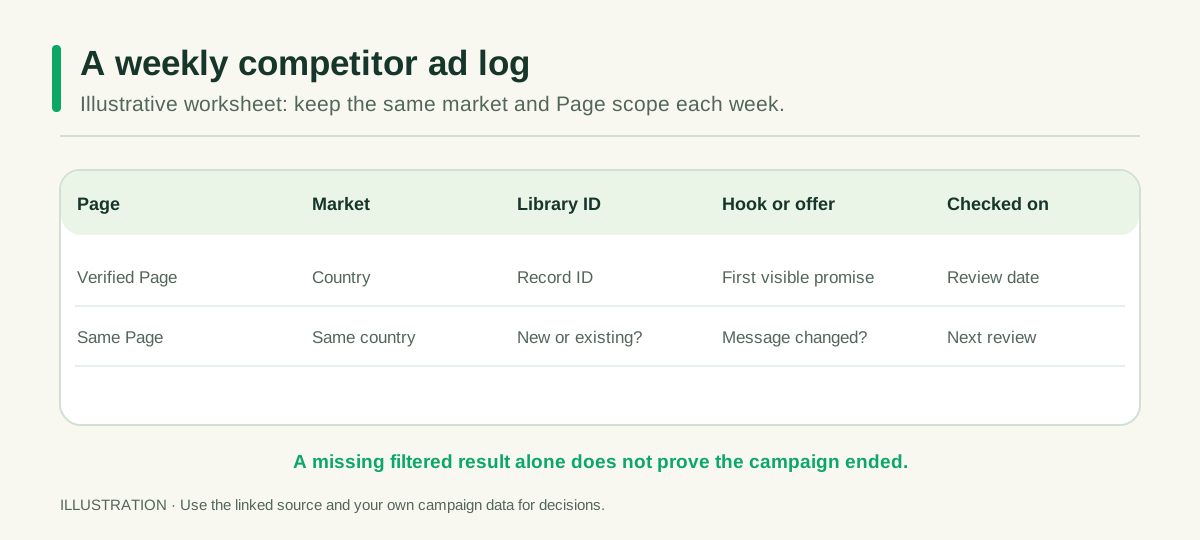
Illustration: a reusable research log, not actual advertiser data.
Turn competitor observation into an original test
The most useful note is not “Competitor X uses a video.” It is “Their active video opens by showing the product solving a specific objection before naming the brand.” That gives a creative strategist a mechanism to test. Write the hypothesis, make an original execution that is truthful for your product, select a control creative, and choose the success measure before launch.
Do not copy a competitor's video, licensed music, creator likeness, testimonials, or claims. You can study the structure of a hook and still produce entirely new assets and copy. For mobile games, see the weekly competitor tracking method.
FAQ: finding competitors' Facebook ads
Can I search Meta Ad Library without knowing the competitor's Page?
Yes. Start with a keyword, category term, or brand name to discover advertisers. Then open the actual Page result and confirm its identity. A keyword result can mix unrelated advertisers; the Page view gives you a cleaner unit for ongoing competitor research.
Does “Active ads” show every ad the competitor has ever run?
No. The ordinary active view answers what is currently listed under your selected scope. Meta keeps additional historical coverage for certain ad categories and regions, which differs from an unrestricted archive of all ordinary ads. Check Meta's current Ad Library description for the applicable coverage.
Can I see a competitor's Facebook ad budget or ROAS?
You cannot read exact billing or revenue from a public ad card. Denote's extension may provide an estimated spend signal for supported ads, but that is different from the advertiser's invoice. The Ad Spend guide explains how to label the estimate.
What if the competitor's ads do not appear?
Check the Page identity, country, ad category, active-status setting, and spelling before inferring anything about the campaign. A regional Page or different filter can change what appears. Log “not found under these settings” and revisit with the same scope later.
How often should I review competitor ad creatives?
A weekly cadence is practical when you need to catch new visible IDs, revised messages, and market variants while keeping the comparison reproducible. Choose a frequency your team can maintain and keep the Page, country, and status settings in the log. The winning-ad research workflow shows how to turn one observation into a test brief.
Start your next review in Meta Ad Library, then use the Denote extension to narrow the list to ads worth opening. A good competitor file tells your team what was visible, when, in which market, and what you decided to test.


