

How to use Denote: choose an ad-research task, find a relevant reference, organize the idea, and turn your observations into a test brief. Start with Top Ads for weekly Game or Tool discovery, Ad Library for a broader search, or Ad Spy for Facebook competitor research.
Updated October 16, 2026. This guide focuses on getting from discovery to a usable creative decision. Product access and available controls can depend on your account and plan.
TL;DR
- Choose the entry point that matches the question; you do not need to begin by collecting files.
- Inspect the creative and retain its source, observation date and research scope.
- Save selected references into a useful collection, with a reason for keeping each one.
- Leave the session with one original concept and a clear variable to test.
How to use Denote: pick the right starting point
The extension supports collection while browsing. Top Ads and the research pages help you choose what merits attention in the first place. Start with one question such as “Which opening makes this product benefit clear?” so the session has a useful endpoint.
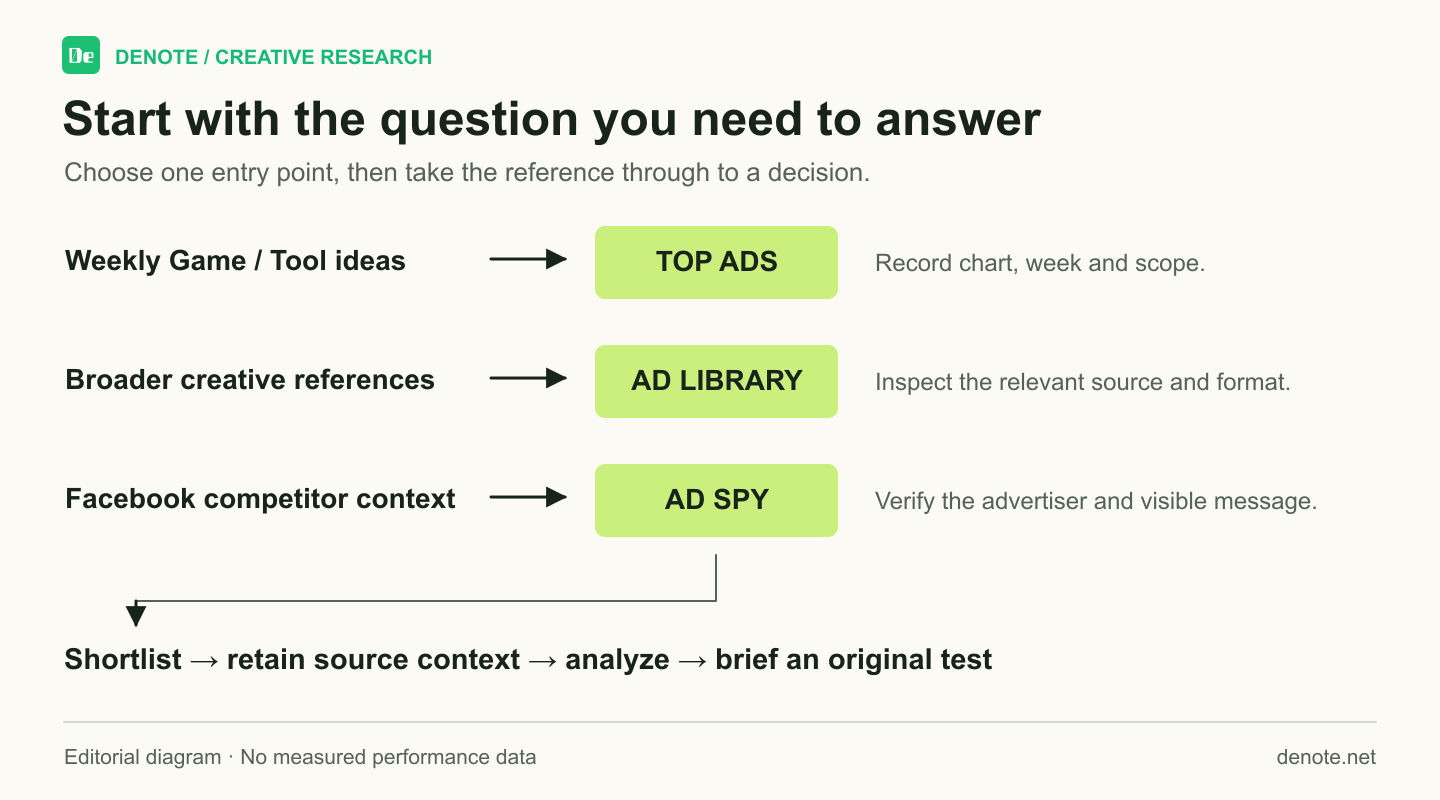
Illustration: choose the research entry point that matches your question, then retain the source context and prepare an original test.
1. Get into the workspace when your task needs it
Open Denote and follow the sign-in or account-creation route presented by the site. The workspace is available through Start Denote; saved collections and some deeper actions require an account.
If you plan to collect references while browsing, install the extension from its official Chrome Web Store listing. Use the listing linked from Denote so you install the intended extension. Return to the ad-source tab after installation and sign in when prompted.
For the first research session, choose one product, audience or creative problem. Creating a large folder structure can wait until you know which references you want to retain.
2. Use Top Ads to find a weekly starting point
Denote Top Ads currently offers Weekly Trending, Weekly Rising and New Creatives, with Game and Tool category choices. Pick the category and completed week relevant to your question.
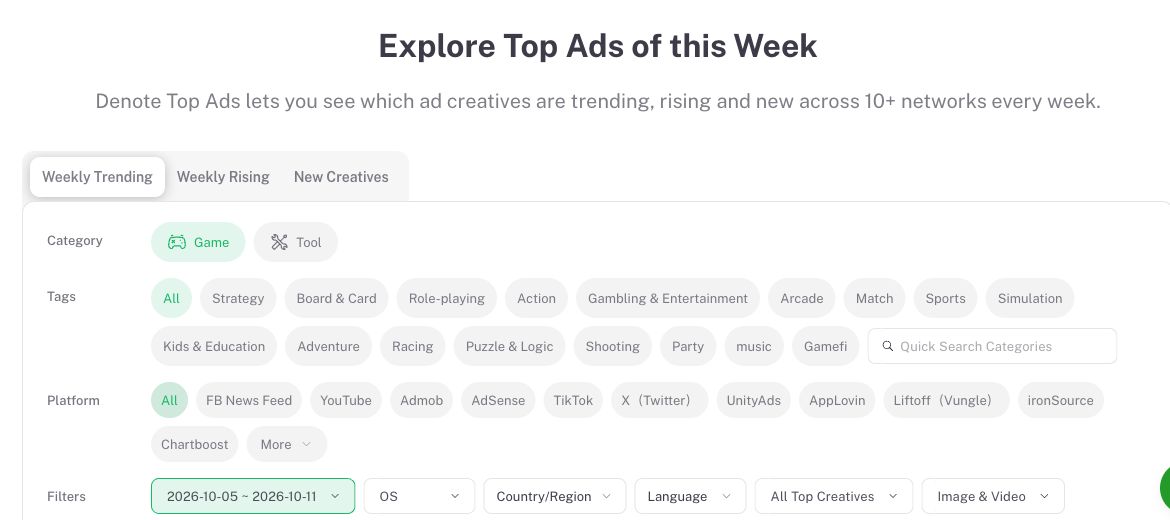
Product screenshot: Denote Top Ads, captured October 14, 2026. Game → Weekly Trending, week of October 5–11. This shows the research scope, not campaign outcomes.
Trending helps you inspect high weekly popularity; Rising helps you inspect movement; New Creatives helps you inspect newly observed ideas. These charts have different selection bases. A position in one is not directly comparable to the same position in another.
Record the chart, week, category, channel scope and any other selected filters. If you research a particular platform, check the actual source platform of the reference. A mixed-channel chart does not make every row a Facebook or TikTok ad.
Inspect the opening, demonstration and offer behind a candidate. Keep a reference when you can name a visible idea and a reason it fits your product. For a longer routine, see how to find ads worth testing.
3. Use Ad Library or Ad Spy for a narrower question
Open Ad Library when you have a category, platform or type of creative in mind. Narrow the available filters, then inspect the returned ads instead of treating the result count as a quality signal. When a result does not expose a detail you need, retain that limitation in the notes.
For Facebook competitor research, begin with Ad Spy. Verify the advertiser identity and look at its visible message, format, offer and destination. The workspace names this route Facebook Ad Spy; TikTok research should start with a relevant TikTok source or Ad Library result.
A competitor review is useful when it answers a question such as “How does this brand demonstrate the benefit?” Public observations do not disclose every targeting setting, conversion or revenue result. Use our competitor research guide to structure the wider review.
4. Save a shortlist with a reason attached
Use Denote's available save action or the extension on a supported ad-source page, then confirm that the reference appears in the intended workspace collection. Boards and folders can keep selected references together. Choose a collection name that explains its purpose, such as Product demonstrations to review.
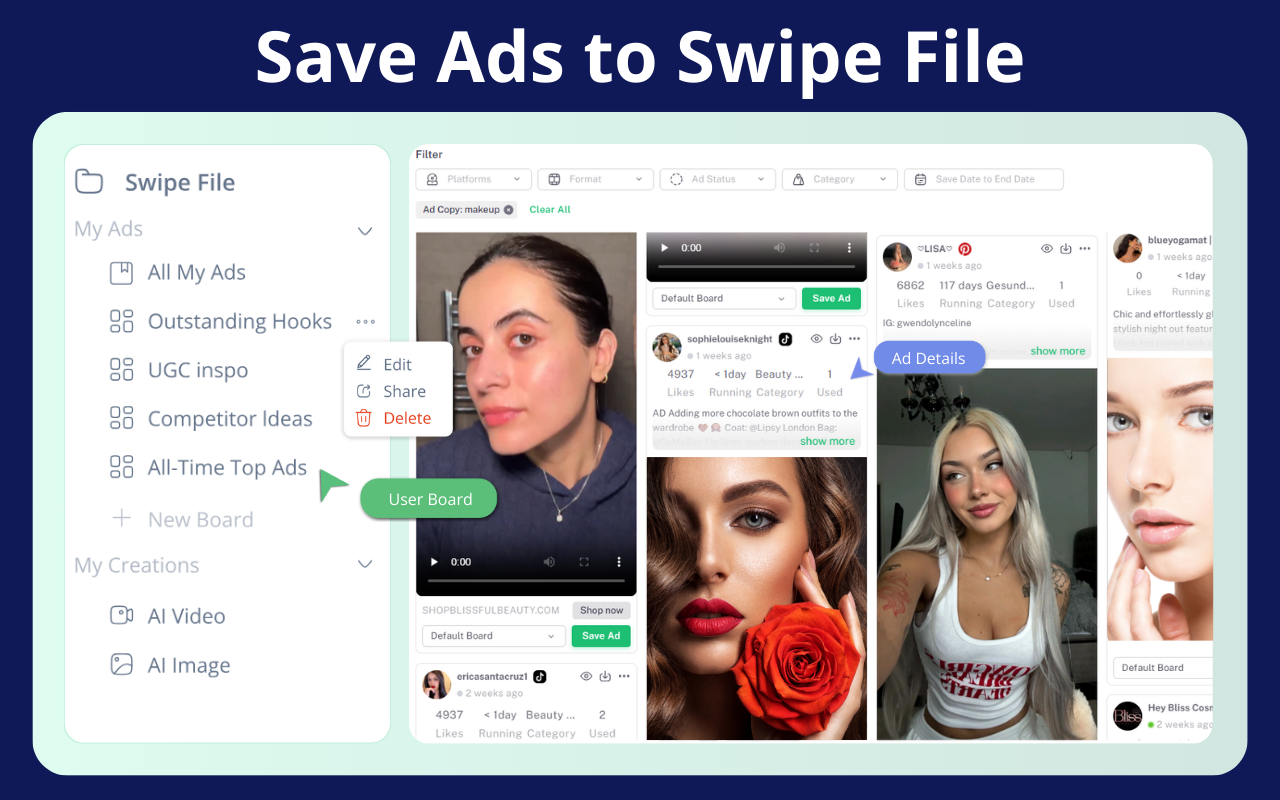
Publisher-supplied example from the official Denote extension listing, retrieved October 14, 2026. It illustrates boards and saved references; the interface can vary by account and version.
Keep these notes alongside each reference in your working research document:
If you only need to retain a Facebook reference, the save and download guide covers that task. Keep the source context even when you also export a media file.
5. Read the data according to its definition
Denote Top Ads popularity scores describe chart signals. An impression/display estimate is a provider estimate. Spend estimates also require their assumptions and scope to be understood. None of these measures alone tells you a competitor's ROAS or profit.
Observed run length can help prioritize a reference for inspection, but it does not establish that a campaign ran continuously at the same budget or that the creative caused good results. Keep missing fields marked unknown.
For Facebook extension estimates, use the ad-spend guide. Avoid setting your own budget by copying an estimated competitor amount.
6. Turn the reference into an original brief
Use the ad creative analysis worksheet to break the reference into its parts. The handoff should explain what you saw, what you think it might help, and what your team will change.
For example, a fictional product video might demonstrate the benefit before naming the product. Your hypothesis could be that showing your own demonstration earlier will explain the benefit faster. Produce two opening sequences while keeping the rest of the concept consistent, then evaluate your own campaign outcomes.
Reference research supplies the idea. Your own results decide whether to develop it further. The ad brief guide can help package the decision for production.
Questions when getting started with Denote
Do I need the extension to browse Top Ads?
You can open the public Top Ads page directly. The extension serves the separate task of collecting references while browsing supported sources. Deeper workspace access may require signing in.
Which Denote feature should I use first?
Start with the task table above. Use a weekly chart for Game/Tool discovery, Ad Library for broader references, and Ad Spy for Facebook competitor context. You can organize the shortlist after finding a relevant idea.
What should I finish with?
A small collection with a clear purpose, source context and one testable brief is a useful first outcome. Once you know how to use Denote for that complete workflow, expand the research around the next decision your team needs to make.


