
Why Ad Spend Optimization Matters More Than Ever in 2026
In 2026, running ads isn’t just about creative ideas—it’s about precision. Rising CPMs and an increasingly fragmented ad ecosystem mean that guessing your budgets is no longer an option. Every dollar spent on Facebook, Instagram, TikTok, or Google counts, and overspending on underperforming campaigns can silently eat into your profits.
Poor visibility into your ad spend is often the real culprit behind wasted budgets. It’s not that your creative ideas are bad; it’s that without tracking and insight, your money flows into campaigns that aren’t delivering. Small businesses, creators, and freelancers all feel the pinch when budgets vanish without clear results.
More importantly, return on ad spend (ROAS) has become a survival metric. In a world where even minor inefficiencies can erode profits, knowing which campaigns actually generate revenue isn’t a “nice-to-have”—it’s critical. Optimizing your ad spend today means smarter allocation tomorrow, better ROI, and the ability to scale confidently without burning cash.
Tip: Treat ad spend like an investment, not an expense. Track, analyze, and act—otherwise, you’re just guessing.
What Makes a Great Ad Spend Tool in 2026
A great ad spend tool isn’t just another dashboard or spreadsheet—it’s a command center that gives clarity, speed, and actionable insight. First, it should provide accurate ad spend tracking across platforms. Knowing exactly how much you’re spending on Facebook, Google, or Instagram—and seeing it in one place—lets you make informed adjustments rather than shooting in the dark.
Next, a top tool must offer clear visibility into return on ad spend. You want to instantly know which campaigns generate profit, which barely break even, and which are quietly draining resources. Granular insights are key, especially for Facebook ad spend, where small tweaks to targeting, creative, or timing can dramatically affect ROI.
Finally, automation is a must—but it should save time, not add more dashboards to manage. The best tools alert you to underperforming campaigns, suggest budget reallocations, and streamline reporting so you can spend more time optimizing strategy instead of crunching numbers. Tools like Denote Ad Spend shine here, giving freelancers, creators, and small businesses the insights they need to make smarter, faster decisions.
Quick tip: Look for tools that combine tracking, insight, and automation—not just pretty graphs. That’s how you turn data into actual ROI.
10 Best Ad Spend Tools Using to Optimize ROI in 2026
In 2026, mastering your ad spend is no longer optional—it’s survival. For freelancers, creators, small businesses, ecommerce shops, and personal brands, every dollar counts. Wasting ad budget because of scattered tracking, overlooked metrics, or blind Facebook ad spend decisions can quietly drain ROI.
This guide spotlights Denote Ad Spend first, along with nine other tools, to help you track, analyze, and optimize ad spend, maximize return on ad spend, and streamline your ad spend tracking across platforms. By the end, you’ll know exactly which tool suits your workflow and goals.
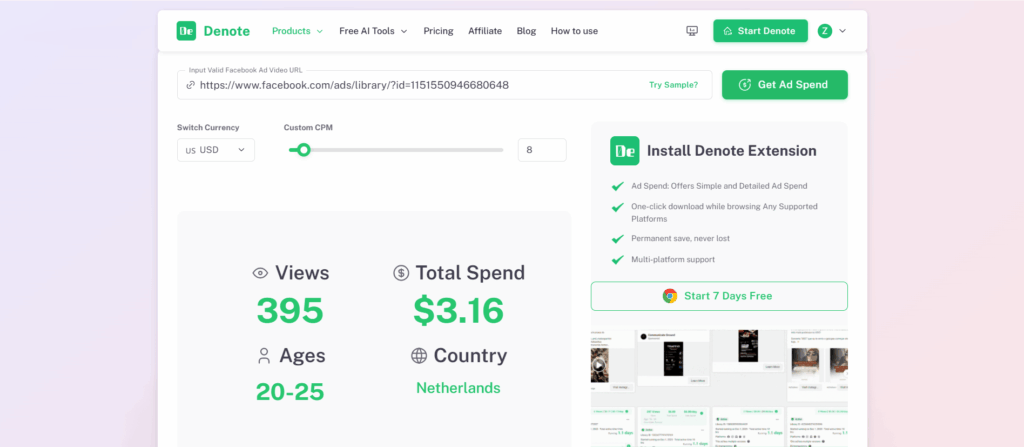
Denote Ad Spend — Best for Competitor Facebook Ad Spend Insights
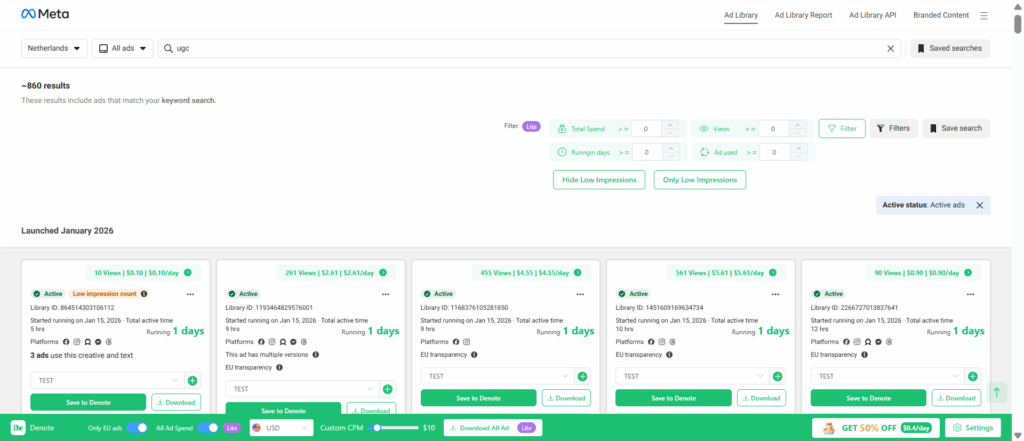
When it comes to understanding Facebook ad spend and competitive strategies, Denote Ad Spend is your secret weapon. Unlike generic tools, it goes beyond guessing by providing real-time competitor ad spend insights, letting you see how much rivals are investing, which campaigns are winning, and which creatives are performing best.
Key Features & Benefits:
- Accurate Facebook Ad Spend Tracking: Instantly uncover competitor budgets without tedious manual estimates.
- ROI-Driven Insights: Link spending to results, so you can optimize campaigns for maximum return on ad spend.
- Trend Identification: Spot rising campaigns early, avoiding wasted spend on underperforming trends.
- Cross-Platform Tracking: Although Facebook-focused, Denote also supports Instagram and other social channels.
- User-Friendly Dashboard: Say goodbye to spreadsheets and scattered data; everything you need is in one place.
Why Freelancers, Creators, and Small Businesses Love It:
- Frees up time for actual strategy instead of data wrangling.
- Provides benchmarks to compete with bigger brands without overspending.
- Helps optimize ad spend tracking with minimal effort.
Example Scenario: A small ecommerce store noticed competitors were spending heavily on a new Facebook campaign format. Using Denote Ad Spend, they could quickly see which ads had the best engagement and adapt their own spend, improving return on ad spend by 35% in just one month.
Pro Tip: Use Denote Ad Spend before allocating budgets—avoiding guesswork can save hundreds or thousands of dollars.
AdClarity — Competitive Ad Spend Intelligence
AdClarity excels at multi-platform competitive intelligence. Unlike tools that only focus on one channel, AdClarity gives you visibility into ad spend trends across social media, display networks, and programmatic channels.
- Who benefits: Small businesses and ecommerce shops trying to benchmark their spend against competitors.
- Core features: Detect seasonal spikes, identify which creatives competitors are pushing, and track geographic ad spend distribution.
- Use Case: A mid-size ecommerce store used AdClarity to uncover that their top competitor was increasing Instagram ad spend by 20% monthly. Using these insights, they adjusted their budget allocation, improved engagement rates, and ultimately increased return on ad spend.
Pro Tip: Use AdClarity alongside Denote Ad Spend to cover both Facebook-specific spend tracking and broader competitive trends.
SpyFu — PPC & Ad Spend Competitive Analysis
SpyFu specializes in search-based PPC ad spend tracking. It’s perfect for freelancers or personal brands running Google Ads campaigns.
- Key advantage: Provides competitor keyword spending patterns. You can see exactly which search terms competitors prioritize and how much budget they allocate.
- Use Case: A creator running a niche coaching program used SpyFu to uncover that competitors were heavily investing in “digital marketing templates.” They redirected a portion of their PPC budget to these keywords, doubling conversions while maintaining a modest spend.
- Limitation: Doesn’t cover social media ad spend; best paired with tools like Denote for a holistic view.
Optmyzr — PPC Optimization & Spend Automation
Automation is the future, and Optmyzr brings it to ad spend optimization.
- Core benefit: Rules-based automation adjusts bids, pauses underperforming ads, and reallocates budget where ROI is higher.
- Target user: Small teams managing multiple campaigns, especially those without dedicated analysts.
- Humorous Note: “If you’ve ever wished your spreadsheets could just do the thinking for you—Optmyzr is the genie in the bottle.”
- Practical Example: A small startup running multiple Facebook campaigns set Optmyzr rules to automatically pause ads underperforming by 20% ROI. They reclaimed thousands of dollars in wasted ad spend in a month.
Semrush Advertising Research — Spend & Strategy Insights
Semrush is a powerhouse for multi-channel ad spend research.
- Strengths: Shows historical ad campaigns, competitor ad spend trends, and keyword budgets.
- Ideal for: Ecommerce stores planning seasonal campaigns.
- Scenario: A new online fashion brand wanted to launch a Spring campaign. Using Semrush, they could see which competitors had boosted Facebook ad spend during last year’s spring sale and aligned their strategy accordingly.
Tip: Combine Semrush insights with Denote Ad Spend to align competitor knowledge across platforms and optimize ROI efficiently.
WordStream — Simplified Ad Spend Management
WordStream is designed for simplicity. It consolidates multiple ad accounts (Google, Facebook) into a single dashboard.
- Why it matters: Freelancers and small businesses often struggle juggling multiple dashboards; WordStream keeps everything in one place.
- Feature Highlight: Quick spend-overview reports, simple recommendations to improve return on ad spend, and alerts for overspending campaigns.
- Practical Tip: Pair it with Denote Ad Spend for competitive insights while managing your own budgets effectively.
Show Me Ad Spend — Chrome Plugin for Quick Spend Views
A lightweight tool for quick, on-the-fly insights.
- Who it’s for: Freelancers, creators, and small business marketers who need immediate visibility of competitor Facebook ad spend.
- How it helps: No setup, no learning curve—just install and view competitor campaigns directly in your browser.
- Pro Advice: Perfect for daily inspiration and spotting new ad formats, but combine with Denote Ad Spend for comprehensive analytics.
AdRoll — Retargeting & Spend Efficiency Tool
AdRoll is optimized for retargeting campaigns, critical for ecommerce.
- Benefit: Allocates budget to audiences most likely to convert.
- Example: An online store selling niche gadgets used AdRoll to retarget visitors who abandoned carts. Combined with insights from Denote Ad Spend, they balanced competitive Facebook ad spend while increasing return on ad spend by 25%.
Revealbot — Automated Ad Spend Optimization & Alerts
Automation plus alerts make Revealbot invaluable.
- Features: Rule-based optimizations, cross-platform budget tracking, and instant notifications for underperforming campaigns.
- Scenario: A solo marketer running multiple campaigns on Facebook and Google could set rules to pause ads below a threshold ROI. This prevents wasted ad spend and ensures budget is reallocated to profitable campaigns.
Madgicx — AI-Powered Ad Spend Manager
AI is reshaping advertising. Madgicx predicts the most effective budget allocation.
- Strengths: Analyzes competitor ad spend patterns, Facebook ad spend trends, and audience performance to optimize campaigns automatically.
- Use Case: A personal brand running multiple Facebook campaigns relied on Madgicx to dynamically allocate spend between ad sets. They achieved higher ROI with less manual intervention.
Quick Comparison: When to Use Which Tool
Tip: Mix and match tools based on your ad strategy, budget, and team size.
How These Tools Help Improve Return on Ad Spend
All the tools in this list ultimately help you get more bang for your advertising buck. By using Denote Ad Spend to track competitor budgets and combine it with automation tools like Revealbot or Madgicx, you can quickly spot which campaigns deserve more budget and which ones are wasting money.
For freelancers and creators, this means less time guessing and more time creating content. For small businesses and ecommerce stores, it’s about reallocating ad spend to the campaigns that actually drive sales. And yes, you’ll finally stop throwing money at Facebook campaigns that look pretty but don’t convert.
Quick tip: Make ad spend tracking a habit. Check weekly, tweak, and watch your return on ad spend climb.
Common Ad Spend Mistakes That Kill ROI
Even experienced marketers fall into simple traps. Overspending on a single platform, ignoring competitor benchmarks, or obsessing over likes instead of conversions can quietly drain your ROI.
With Denote Ad Spend, you get real competitor insights, so you don’t guess blindly. Combine that with cross-platform visibility, and you can catch mistakes before they turn expensive. Think of it as having a GPS for your advertising dollars—no more getting lost in spreadsheets or dashboards.
Optimize Ad Spend Before You Scale It
Scaling campaigns without clarity is like stepping on the gas without looking at the speedometer—you might hit your goal, or crash. Use Denote Ad Spend to see what competitors spend, track your own campaigns, and fine-tune budgets before you go big.
Even small adjustments—like shifting a bit of budget from underperforming ads to those already showing strong return on ad spend—can make a big difference. The goal isn’t just bigger spend; it’s smarter spend.


