.jpg)
Why AI is transforming Ad Creative Management in 2026
By 2026, AI has completely changed the way we handle ad creative. It takes care of the boring, repetitive stuff, figures out which ads are likely to work best, and tweaks campaigns on platforms like Facebook, TikTok, Instagram—you name it. Marketers get to spend more time on big-picture ideas and real storytelling. The end result? Ads that hit harder, feel personal, and get out the door a lot faster.
What to Look for in AI Tools for Ad Creative Management
Picking the right AI tool isn’t easy—it can feel like you’re wandering around in the dark, running into invisible walls. Let’s be real, some AI solutions are just better than others. The gap between a sluggish workflow and one that actually sparks creativity usually comes down to whether the tool helps you manage your ad creative, plain and simple. If you’re checking out new tools in 2026, keep your eye on a couple of must-haves: solid support for multiple platforms and a way to keep your creative assets organized. Those two things make a real difference.
Multi-Platform Ad Saving
Connect and save ads from Facebook, TikTok, Instagram, and other platforms
The modern marketer doesn’t operate on a single platform. Ads must flow seamlessly across multiple social channels, each with its own format and audience expectations. The ideal AI tool allows you to connect directly to platforms like Facebook Ad Library, TikTok Ads, and Instagram, automatically pulling creatives into a centralized hub. This feature is a game-changer for teams managing hundreds—or even thousands—of active campaigns. Instead of manually downloading and storing creatives from each platform, AI tools let you capture them in a click, ensuring nothing gets lost in the shuffle. Tools like Denote excel here, acting as a hub where multi-platform ads are not just stored but intelligently categorized and ready for immediate use.
Access competitor ads and trending creatives across channels
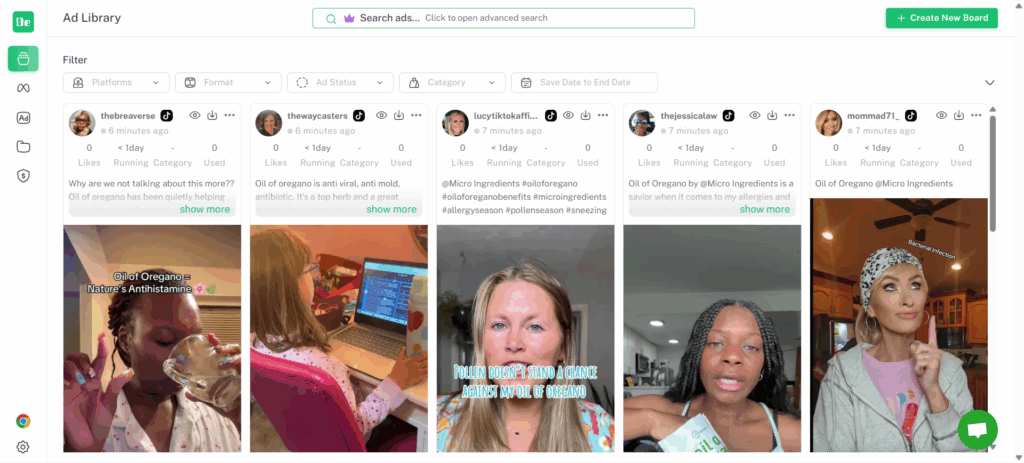
Keeping an eye on the competition is no longer a manual scavenger hunt. Advanced AI tools now provide access to competitor ads and trending creative content across multiple platforms, making it possible to analyze what’s working in real-time. This insight fuels smarter ad creative management, allowing teams to replicate successful formats, identify gaps, and innovate without blindly guessing. It’s like having a secret window into the strategies of top-performing brands, all organized neatly in your dashboard.
Organized Creative Management
Categorize ads by campaign, product, or format
When your creative library starts exploding, things can get messy fast. Good AI tools step in and help you organize everything—sort your ads by campaign, product, format, or who you’re targeting. With clear labels, your team grabs what they need right away instead of digging through endless folders. It’s like having a digital librarian just for your ads. Everything’s right where you expect it.
Use boards, folders, or AI-assisted tags for quick retrieval
Beyond basic folders, modern ad creative management platforms integrate AI-assisted tagging, boards, and search filters. This allows teams to retrieve assets not just by name, but by visual elements, copy tone, or even predicted performance. Tools like Denote take this a step further by providing collaborative boards, where teams can comment, vote, or approve creatives in a shared environment. This collaborative structure ensures that the creative process flows smoothly from ideation to deployment.
Analytics & Optimization Features
Track ad performance, detect fatigue, and rotate creatives
A stunning ad means nothing if it doesn’t get results. With AI tools, you can track performance in real time, spot when people start tuning out the same old creative, and get smart tips on when to switch things up. That way, your campaigns stay sharp and keep working—pretty much essential if you want to manage ads like a pro in 2026.
Predictive scoring and A/B insights for better ROI
Predictive scoring transforms data into actionable insights. AI can score creatives based on predicted engagement, conversion potential, and audience resonance. Coupled with A/B testing insights, marketers can make informed decisions, doubling down on winning creatives and adjusting underperforming ones. This data-driven approach minimizes wasted spend while maximizing campaign impact—essential for any modern marketing team striving for both scale and creativity.
Top 9 AI Tools for Ad Creative Management in 2026
In the fast-paced world of digital marketing, having the right AI tools for ad creative management can make the difference between campaigns that dazzle and campaigns that fizzle. Below, we break down the top nine tools that are transforming how marketers create, organize, and optimize ad creatives in 2026.
1. Denote
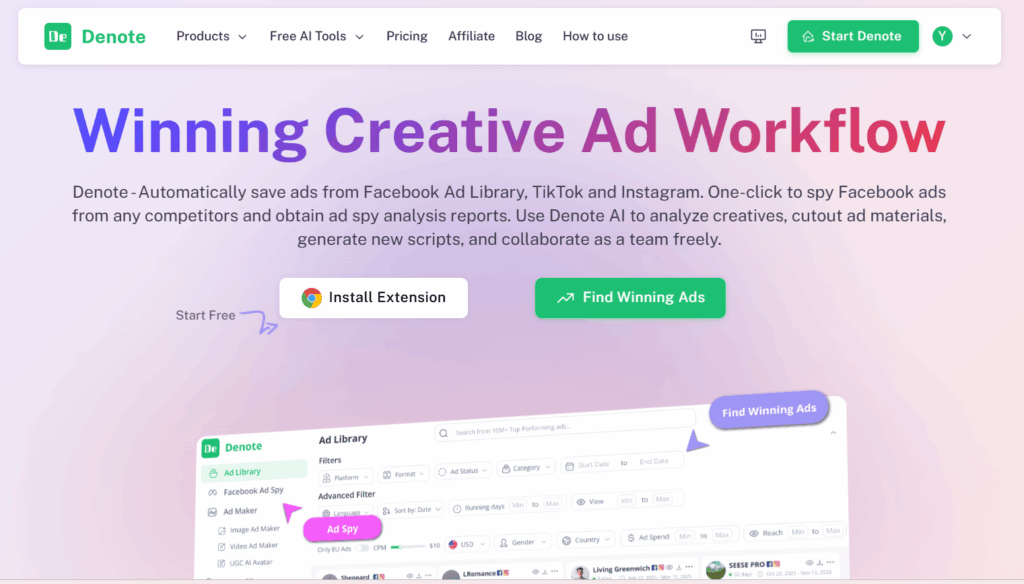
Denote isn’t just another creative library. It’s where teams actually get things done together—sharing ideas, tracking ads, and keeping everything organized in one place. If you’re running campaigns across Facebook, TikTok, Instagram, or anywhere else, Denote pulls all your ads into a single workspace so you’re not jumping around trying to find stuff.
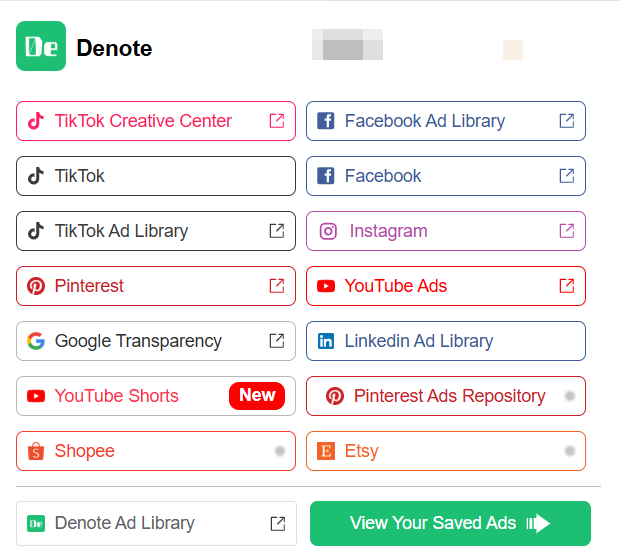
What really makes Denote stand out? You can sort your creative assets any way you want—by campaign, format, or category. No more hunting through endless folders. Plus, you get a clear look at what your competitors are doing and can spot trends before they blow up. The platform tracks how your creative strategies perform, so you know what’s working and what to tweak.
Agencies and big teams get extra help with workflow tools. Assign tasks, approve content, and keep your brand voice on point across every project—all in one spot. Denote turns the usual chaos of ad management into a process that actually makes sense. Its smart boards and AI-powered tags mean you find what you need fast, cut down on busywork, and finally have time to focus on creative ideas that move the needle.
2. AdCreative.ai
AdCreative.ai is built for marketers who want to crank out a ton of creative content fast, but still care about quality. It handles both static images and short videos, pumping out a bunch of ad variations in just minutes.
The cool thing? It predicts which ads are likely to get clicks, so your team can double down on what actually works and avoid throwing money away. It digs into engagement data, then suggests tweaks to your copy, design, or layout—real, data-driven advice to help you get better results.
Whether you’re juggling lots of campaigns or testing a bunch of ideas at once, AdCreative.ai speeds up your whole creative process and keeps your ads tuned for top performance.
3. Predis.ai
Predis.ai focuses on automating ad creative creation and scheduling, making it an excellent choice for social media marketers. It integrates seamlessly with platforms like Facebook and Instagram, generating short-form content tailored for each channel.
Predis.ai not only creates ads but also schedules them, ensuring consistent publishing across platforms. Its AI engine can adapt copy and visuals to platform-specific best practices, saving marketers hours of manual work. This tool is particularly useful for teams managing multiple social accounts, allowing them to maintain a high cadence of content without compromising quality.

4. Pencil
Pencil specializes in AI-driven ad variation generation. By analyzing historical campaign data and engagement trends, it predicts which creative elements are likely to resonate with audiences.
Marketers can quickly generate multiple versions of a single ad, testing different headlines, visuals, or calls-to-action without manually designing each variant. Pencil’s platform integration capabilities allow seamless publishing across Facebook, Instagram, and TikTok, making it an indispensable tool for ad creative management in multi-channel campaigns.
5. Creatify
Creatify is tailored for e-commerce brands and teams leveraging user-generated content (UGC) style ads. By pulling product URLs, Creatify can automatically generate short-form video creatives that showcase products dynamically.
Its AI engine ensures that the content is platform-optimized, engaging, and ready to convert. For marketers looking to scale ad creative management in the e-commerce space, Creatify reduces the time from product launch to campaign deployment, turning catalogs into high-performing ad content with minimal effort.
6. Madgicx
Madgicx offers a full-stack ad management solution, combining creative analysis, campaign automation, and budget optimization in one platform. It excels at identifying the best-performing creatives and automatically adjusting campaigns based on performance metrics.
With cross-channel automation, Madgicx ensures that ads maintain consistency across multiple platforms while dynamically allocating budget to top-performing campaigns. For marketers looking to integrate ad creative management with overall campaign strategy, Madgicx provides actionable insights and simplifies complex workflows.
7. Omneky
Omneky focuses on AI creative generation for global campaigns, helping brands maintain consistency while adapting to regional preferences. Its AI engine can automatically tailor copy, visuals, and video formats to different markets, ensuring culturally relevant and high-performing creatives.
This tool is perfect for enterprises managing multichannel ad creative management, providing automation, predictive analytics, and brand consistency across international campaigns. Omneky empowers marketers to scale campaigns efficiently without sacrificing quality or brand integrity.
8. CreativeX
Omneky uses AI to create ads for brands running global campaigns. It keeps messaging consistent, but still adapts everything—copy, visuals, videos—to fit each region’s culture and tastes. So whether you’re targeting Tokyo or Paris, your ads actually feel like they belong.
It’s a great fit for companies juggling lots of channels and markets. Omneky handles automation and predictive analytics, so your team doesn’t get bogged down with manual tweaks. Marketers can launch big campaigns faster, keep the brand’s voice strong everywhere, and trust that quality won’t slip, no matter how far you scale.
9. Re:nable
Re:nable provides a drag-and-drop AI ad editor combined with optimization workflows. Marketers can create, edit, and publish feed-ready ads quickly, while AI assists in predicting which creatives will perform best.
Its platform supports collaborative workflows, allowing teams to experiment with variations, test performance, and deploy campaigns efficiently. Re:nable is particularly effective for marketers seeking a flexible, hands-on tool that combines creative freedom with AI-driven optimization.
How to Choose the Right AI Tool for Your Team
Selecting the perfect AI tool for ad creative management is a bit like choosing the right vehicle for a road trip—you want something that fits your destination, team size, and resources. Not every tool suits every marketer, so understanding your needs is the first step.
Solo marketers vs. agencies vs. enterprises
If you’re running marketing solo, you want things fast and simple. That’s where tools like AdCreative.ai or Predis.ai shine. They crank out creatives in no time, and you don’t have to mess around with complicated setups. One person can handle a bunch of campaigns, even across different platforms, without getting buried.
Agencies are a different story. They’ve got lots of clients, each with their own look and feel. So they need something more powerful—think Denote or Madgicx. These tools bring everything together: creative storage, team chats, analytics, even boards to track projects. With features like workflow management and saving ads for different platforms, agencies can keep it all straight and deliver on-brand work every time.
Enterprises? Now you’re talking big scale. They need to launch campaigns all over the world, but keep everything true to their brand. That’s where Omneky and CreativeX step in. They help with brand control, manage ads across channels, and even score creative quality. So every ad fits the company’s standards, but still connects with local audiences.
In the end, picking the right AI tool really comes down to your team, how big your campaigns are, and how much teamwork you need.
Budget tiers & scalability
Budget is always a critical factor. Some tools are subscription-based and more affordable for solo marketers or small teams, while others, designed for agencies or enterprises, come with premium features like predictive analytics, creative scoring, or automated workflow integration.
Scalability is just as important as cost. An AI tool might work beautifully for 5 campaigns but falter when managing 50 or 100. Investing in a platform like Denote or Madgicx ensures that as your campaign volume grows, the system can handle additional creatives, team members, and cross-channel operations without slowing down your workflow.
Testing & performance metrics integration
A good ad creative management tool doesn’t stop at creation—it also enables testing and optimization. Features such as A/B testing, multivariate testing, and predictive scoring allow marketers to continuously refine creatives. Integrating these analytics directly into your workflow saves time and provides actionable insights.
Tools like Pencil or Re:nable make it easy to experiment with variations, identify winning creatives, and adjust underperforming ads before they drain your budget. In 2026, data-driven ad creative management is not optional—it’s essential for campaigns that aim to outperform competition and maximize ROI.
Best Practices for Ad Creative Management in 2026
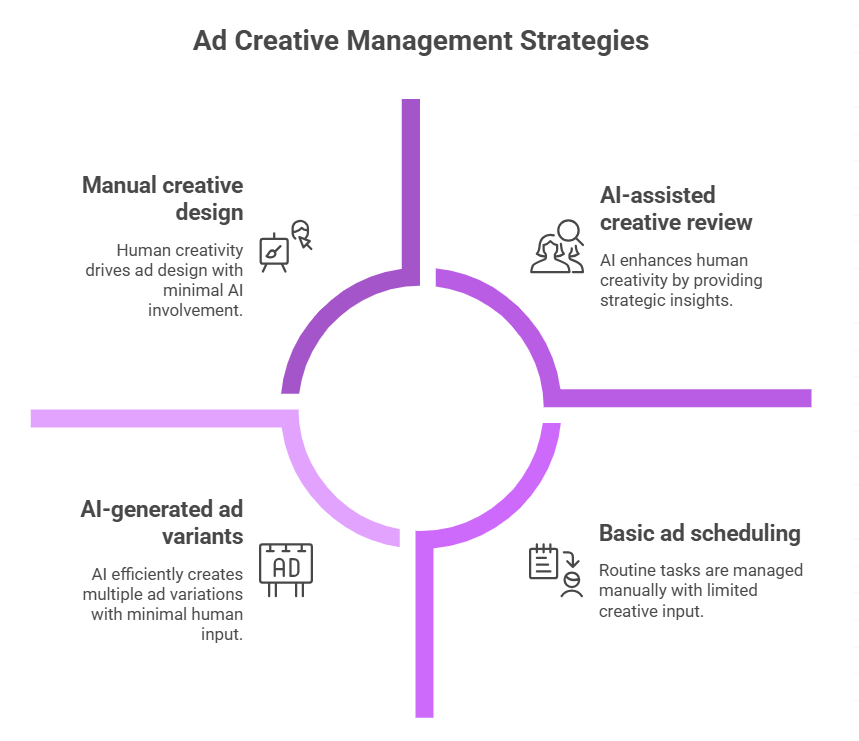
Even with the most advanced AI tools, human insight remains indispensable. The most successful teams combine AI efficiency with strategic creativity. Here are the top practices to elevate your ad creative management game in 2026:
Automate routine tasks, not strategy
AI shines when handling repetitive tasks: resizing creatives, generating multiple ad variants, and scheduling posts. Automating these tasks frees marketers to focus on strategy, storytelling, and audience engagement. Think of AI as your creative assistant, handling tedious work so you can focus on the big picture.
Pair AI with human creativity
AI can generate dozens of variations, but humans provide nuance, intuition, and emotional resonance. Pairing AI outputs with human oversight ensures that ads don’t feel robotic. Teams should review and tweak AI-generated copy, visuals, or video sequences to ensure they align with brand tone and campaign objectives. This collaboration is where true ad creative management magic happens.
Continuous testing & iteration (A/B + multivariate)
No matter how smart AI gets, it still can’t read every audience perfectly. That’s why teams keep testing—running A/B or multivariate experiments to see what actually works and what falls flat. When testing becomes part of the regular workflow, campaigns stay sharp and keep improving. Tools like Denote, Pencil, and Re:nable make this whole process easier, tracking how things perform across different platforms right as it happens.
Conclusion
The landscape of ad creative management in 2026 is vibrant, fast-paced, and powered by AI. From solo marketers to global enterprises, the right tools can transform how creatives are generated, organized, and optimized. Tools like Denote, AdCreative.ai, and Madgicx not only automate tedious tasks but also provide insights, collaboration, and workflow management that were impossible a few years ago.
As AI continues to evolve, the combination of human creativity and machine intelligence will define the next generation of marketing campaigns. By selecting the right tools, following best practices, and continuously iterating, marketers can scale campaigns efficiently, maintain high-quality creative output, and drive measurable results. In 2026, mastering ad creative management isn’t just a competitive advantage—it’s a necessity for anyone aiming to succeed in the ever-evolving digital marketing world.


