.jpg)
What Is a Targeted Customer?
At its core, a targeted customer is the specific group of users a business intentionally focuses on because they are most likely to convert, retain, and generate long-term value.
That sounds simple. The nuance lives in the word specific.
A targeted customer is not:
- Everyone who could use your product
- Everyone who likes your content
- Everyone who clicked your ad
A targeted customer is the person who is:
- Actively aware of a problem
- Close to making a decision
- Responsive to certain messages, offers, and creatives
Think of the difference like this: Traffic is a crowd walking past a store. A targeted customer is the person already holding their wallet.
Targeted Customer vs Target Audience: Why the Difference Matters in Advertising
These two terms are often used interchangeably, but confusing them is one of the fastest ways to inflate ad spend without improving results.
A target audience is broad by design. It’s useful for reach, awareness, and top-of-funnel campaigns. A targeted customer, on the other hand, sits much closer to revenue.
Here’s the practical distinction:
- Target audience answers: “Who might care?”
- Targeted customer answers: “Who is ready to act?”
You see it right away in paid ads. When you tailor campaigns for a general audience, you get clicks, likes, maybe a few comments. But if you build your ads around a specific customer, that’s when you actually see sales. So when teams say, “People notice our ads, but no one’s buying,” the problem isn’t usually the creative—it’s that they’re talking to everyone instead of the right someone.
Why “More Traffic” Does Not Mean More Targeted Customers
A lot of folks in marketing fall into this trap: they think growth always means progress. More website visits? Looks good on paper. Big bump in impressions? Makes for a flashy report. But honestly, none of that matters if you’re not reaching the people who actually care.
When you chase bigger numbers without zeroing in on who your real customers are, things usually get messy. Your conversion rates tank. Your CPMs shoot up. You burn through good ads way too fast because you’re showing them to people who never had any interest.
Getting crystal clear about your target customer changes everything. It cuts out all the noise. You stop wasting budget. And finally, your message doesn’t just bounce around — it actually connects.
Why Targeted Customer Definition Directly Impacts Ad Performance
Advertising platforms are brutally honest. They don’t care about your positioning statement or brand manifesto. They care about signals.
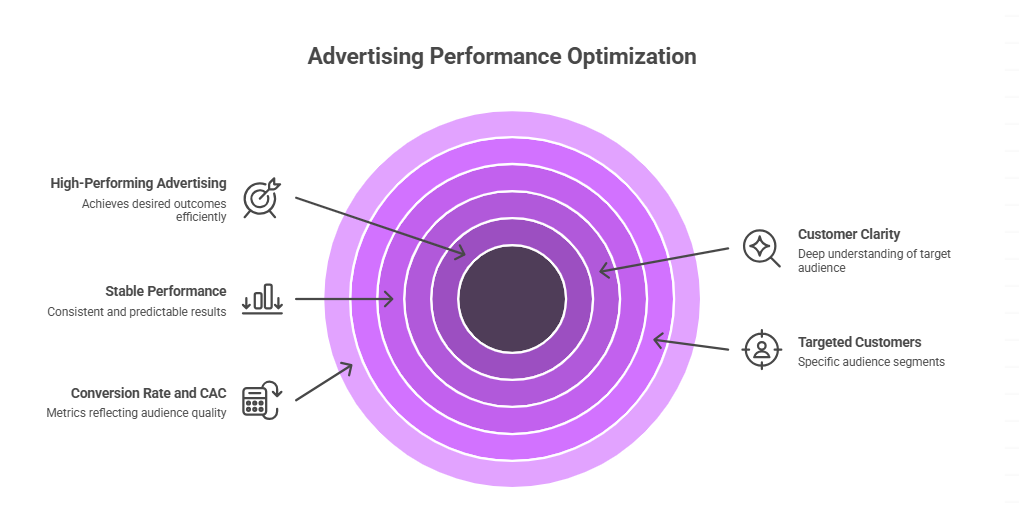
And the quality of those signals depends almost entirely on how clearly you’ve defined your targeted customer.
The Relationship Between Targeted Customers, Conversion Rate, and CAC
Conversion rate and CAC aren’t just numbers—they show you exactly how good your audience really is.
If your targeting’s all over the place, platforms have no idea who to focus on. They toss your ads in front of random people who barely care, gather a bunch of useless data, and then start steering your campaigns in the wrong direction. Next thing you know, you’re swapping out creatives, rewriting headlines, or pointing fingers at the algorithm.
But when your targeting aligns with a real targeted customer, something interesting happens: performance stabilizes. Small improvements compound. Ads don’t need to shout—they resonate.
This is why high-performing advertisers obsess less over hacks and more over customer clarity.
How Wrong Targeting Leads to Creative Fatigue and Budget Waste
Creative fatigue is often misunderstood. Teams think an ad stops working because people have “seen it too many times.”
More often, it stops working because it was never speaking to the right targeted customer to begin with.
When creatives are shown to a broad or misaligned audience, engagement spikes early (novelty effect) and collapses just as fast. The message doesn’t stick because it doesn’t match the viewer’s internal problem.
By contrast, ads aimed at a well-defined targeted customer tend to age gracefully. They don’t rely on shock or gimmicks. They rely on relevance.
This is also where competitor analysis becomes powerful. By studying which competitor ads persist over time—and which angles keep reappearing—you’re essentially observing which targeted customers are consistently profitable across the market.
How to Identify Your Targeted Customer Using Real Market Signals
This is where most guides disappoint. They tell you to brainstorm personas, draw empathy maps, or imagine your “ideal user.”
Those exercises have value—but only after you’ve grounded them in reality. A modern targeted customer should be discovered, not invented.
Start With Competitor Behavior, Not Assumptions
Your competitors are already paying to test hypotheses about targeted customers. Every ad they run is a bet. Every scaled creative is a winning bet.
Instead of asking “Who do we want our targeted customer to be?”, ask:
- Who are competitors consistently talking to?
- Which pain points show up again and again?
- What language keeps surviving creative rotation?
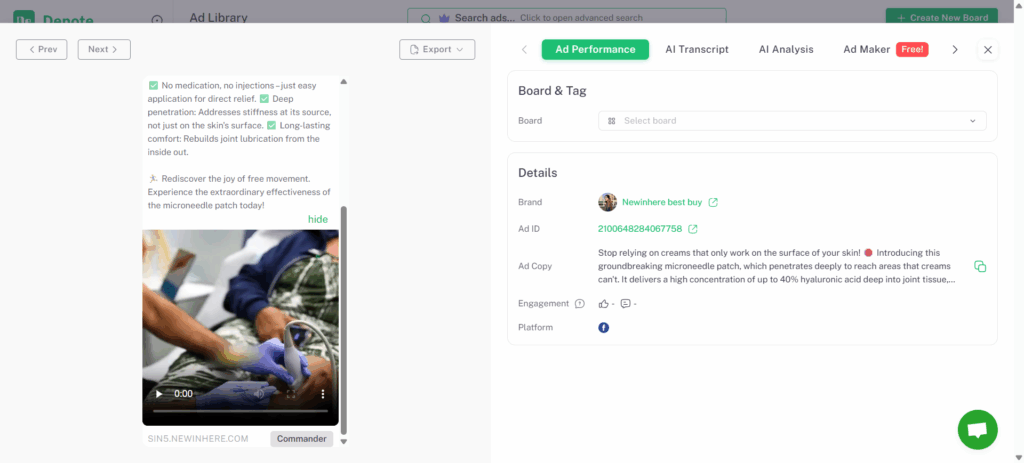
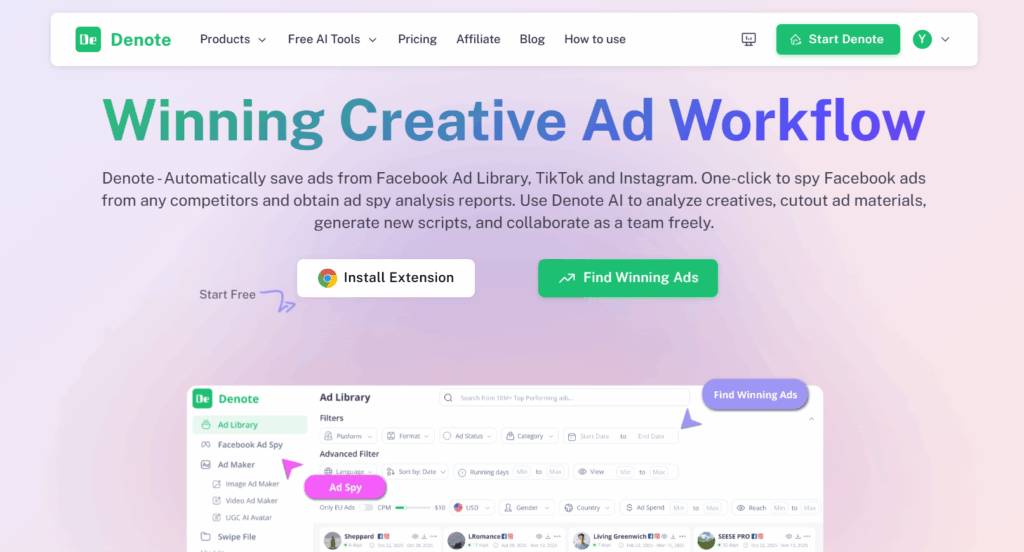
Tools like Denote make this process practical by allowing you to analyze competitor ads across platforms, spot patterns, and reverse-engineer which targeted customer those ads are designed for.
You’re not copying ads. You’re decoding intent.
Use Ad Data to Identify High-Intent Targeted Customers
High-intent targeted customers behave differently. They click different ads. They respond to specific hooks. They tolerate less fluff.
Look for signals such as:
- Ads focused on solutions, not features
- Creatives that assume awareness (no long explanations)
- Direct calls to action without heavy education
These signals usually indicate a targeted customer who is already problem-aware and closer to purchase.
What Winning Ads Reveal About the True Targeted Customer
A great ad acts like a mirror, showing you exactly what the customer cares about—what keeps them up at night, what they want, what makes them tick. When an ad talks about speed, it’s because the customer hates wasting time. If it promises certainty, that customer’s trying to avoid risk. If it pushes comparisons, you’re looking at someone who’s still weighing their options.
When you start lining up ads from all your competitors and really digging into these patterns, you get a clearer picture of who you’re actually talking to—way clearer than anything you’d get from sitting in a room guessing. That’s the moment when data turns into something real. Insight.
Targeted Customer Strategies Across Ad Platforms
Now that you understand the concept, it’s time to see it in action. The way you identify and engage your targeted customer differs depending on the platform—and ignoring these differences can waste both budget and attention.
Targeted Customer in Facebook and Instagram Ads
Facebook and Instagram are playgrounds for attention—but only if you know which sandbox your targeted customer plays in.
A targeted customer here is someone whose behaviors and interests align with your product’s problem-solution fit. Look beyond basic demographics:
- Interests and pages they follow
- Interaction patterns with competitor ads
- Engagement timing and format preferences
Cold Audiences vs Retargeting vs Lookalike: Which Gets You Closer to the Targeted Customer?
Cold audiences are good for testing the waters, but your real customers usually come from retargeting and lookalike groups. These are people who’ve already checked out your stuff or act a lot like folks who’ve bought from you before. With Denote, you can see how competitors’ audiences behave and figure out who’s already interested in what you offer. That way, you skip the expensive guesswork and go straight for the people who are ready to engage.
Targeted Customer in Google Search and YouTube Ads
Google and YouTube ads reveal intent signals that are goldmines for discovering targeted customers. A user typing “best ecommerce ad library for competitive research” is already far along in the decision journey—they are actively seeking solutions and fit the profile of a targeted customer.
The key is to segment campaigns based on search intent and engagement signals rather than broad keyword themes. This ensures your ads meet your targeted customer at the precise moment they are looking for answers.
Targeted Customer in TikTok Ads
TikTok’s algorithm surfaces niche communities at lightning speed. A viral trend might suggest a large audience, but your targeted customer is often hidden within these viral waves. They engage consistently, click through to product pages, or comment with intent-driven questions. Observing competitors’ successful TikTok campaigns via tools like Denote can uncover subtle behavioral patterns that reveal your high-value targeted customer.
Common Mistakes Teams Make When Defining a Targeted Customer
Even experienced marketers trip here. Misdefining your targeted customer can be costly.
Confusing Broad Reach With Targeted Customer Growth
Broad reach feels productive—it shows impressions, clicks, and social proof. But quantity does not equal quality. Focusing solely on reach often results in low conversion rates because the message reaches the wrong eyes.
Over-Relying on Demographics Instead of Behavior
Age, gender, or location alone rarely define a targeted customer. Behavior and intent matter far more. For example, someone aged 28–35 in the US may be a fan of ecommerce tools, but unless they actively research, compare, and test solutions, they aren’t a high-value targeted customer.
Ignoring Competitor Data When Defining the Targeted Customer
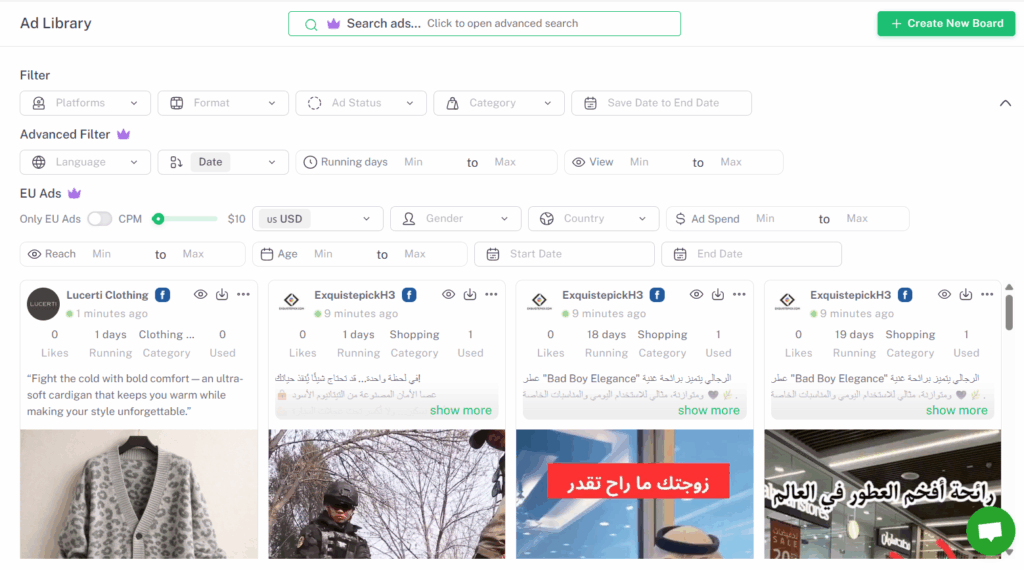
Many teams underestimate the insights hiding in competitor ads. Patterns in messaging, ad placement, and creative styles are often strong indicators of the targeted customer. Using Denote, these patterns can be quantified and applied to your campaigns, ensuring your targeting is not built on assumptions.
How to Continuously Refine Your Targeted Customer With Data
Your targeted customer is not static—it evolves with market trends, product updates, and competitor moves. Continuous refinement ensures relevance.
Using Ad Performance and Creative Trends as Feedback Loops
Monitor your campaigns: which ads convert consistently? Which creative angles resonate? These observations reveal whether your targeting aligns with the real-world behavior of your targeted customer. Conversion data is the most honest mirror; it does not lie.
When and Why Your Targeted Customer Definition Should Change
Sometimes the product evolves. Sometimes the market shifts. Your high-intent targeted customer yesterday might be irrelevant tomorrow. Keep testing, segmenting, and updating. The definition of a targeted customer should be a living document, not a slide deck locked in July.
Conclusion
A targeted customer is more than a persona—it’s a strategic choice that drives ad performance, product alignment, and growth. By analyzing competitor ads, platform signals, and user behavior, you identify high-intent individuals who truly matter. Tools like Denote turn this insight into action, shifting campaigns from guesswork to precision. Treat your targeted customer as a living market signal, and every marketing dollar, ad, and product improvement becomes more effective.