
Ad hooks are the opening images, actions, words, or sounds that give someone a reason to pay attention. To find a useful hook in competitor ads, describe what happens first, identify the question it creates, and decide whether your own product can deliver the promised payoff.
Start with an observable sentence: “A king stands below a channel of rocks while a match puzzle sits underneath.” That is more useful to a creative team than “a powerful hook.” It names something the team can examine and adapt.
This guide uses three real video references found in Denote, then turns their opening mechanisms into research questions and original test ideas.
TL;DR
- Separate the hook that introduces an idea from the angle that gives someone a reason to choose the product.
- Record the first frame, the opening action, visible text, and the handoff to the next scene.
- Compare references with the same creative question. Cross-category examples teach mechanisms; they do not establish a competitive benchmark.
- Preserve the source week and advertiser context. A prominent ad is a reference to inspect, not proof of profitable acquisition.
- Adapt one mechanism with your own assets, then measure the result in your own campaign.
What makes an ad hook different from an angle?
A hook earns attention. An angle makes the argument. The format is the container.
For example, a puzzle game might argue that it offers satisfying decisions. Its hook could show a character in trouble, a board with one missing move, or the consequence of a wrong choice. Those are different ways to introduce a similar promise.
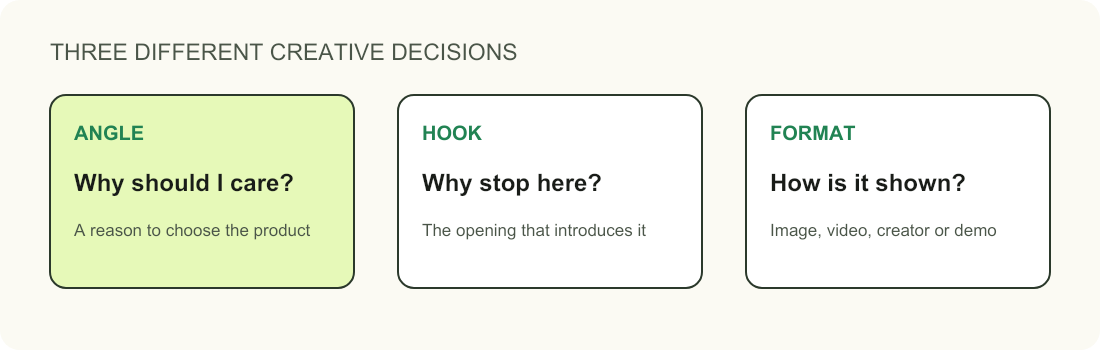
Editorial framework: use the three labels to describe separate production decisions.
TikTok's Creative Codes recommends a hook, body, and close structure. That is useful planning guidance: the opening should lead into a message and a next action. It does not establish that one opening works on every platform or for every audience.
For a more detailed message comparison, use the ad angle map. Keep this guide focused on what the viewer encounters first.
Where these ad hook examples came from
We inspected video previews in Denote Workspace → Trending Ads → Game, completed week October 12–18, 2026, on October 22. Tags, platforms, countries, languages and operating systems were set to All; formats were Image & Video; Remove Re-ads was off. We screened the first 12 visible rows and selected three contrasting videos.
The examples use sampled video frames at approximately 0 and 11 seconds for Royal Kingdom, 0 and 19 seconds for Supremacy, and 0 and 16 seconds for Tasty Travels. They are a visual teaching set across game types, not a matched group of direct competitors. We did not continuously review the intervening footage, evaluate audio tracks or complete videos, or measure campaign targeting or conversion outcomes.
Open the source Game Trending chart. Its weekly popularity scores helped surface references; this guide does not rank the openings by effectiveness. The illustrations of source ads use the original image or video poster files displayed in those previews, with advertiser artwork and copy retained.
Three real ad hooks to study
1. Royal Kingdom: show a problem and a possible action together
The Royal Kingdom opening places a king in a confined space below a winding channel packed with rocks. A match grid fills the lower part of the frame. The sampled frames show a hand cue on the board while the character and rocks remain part of the scene.
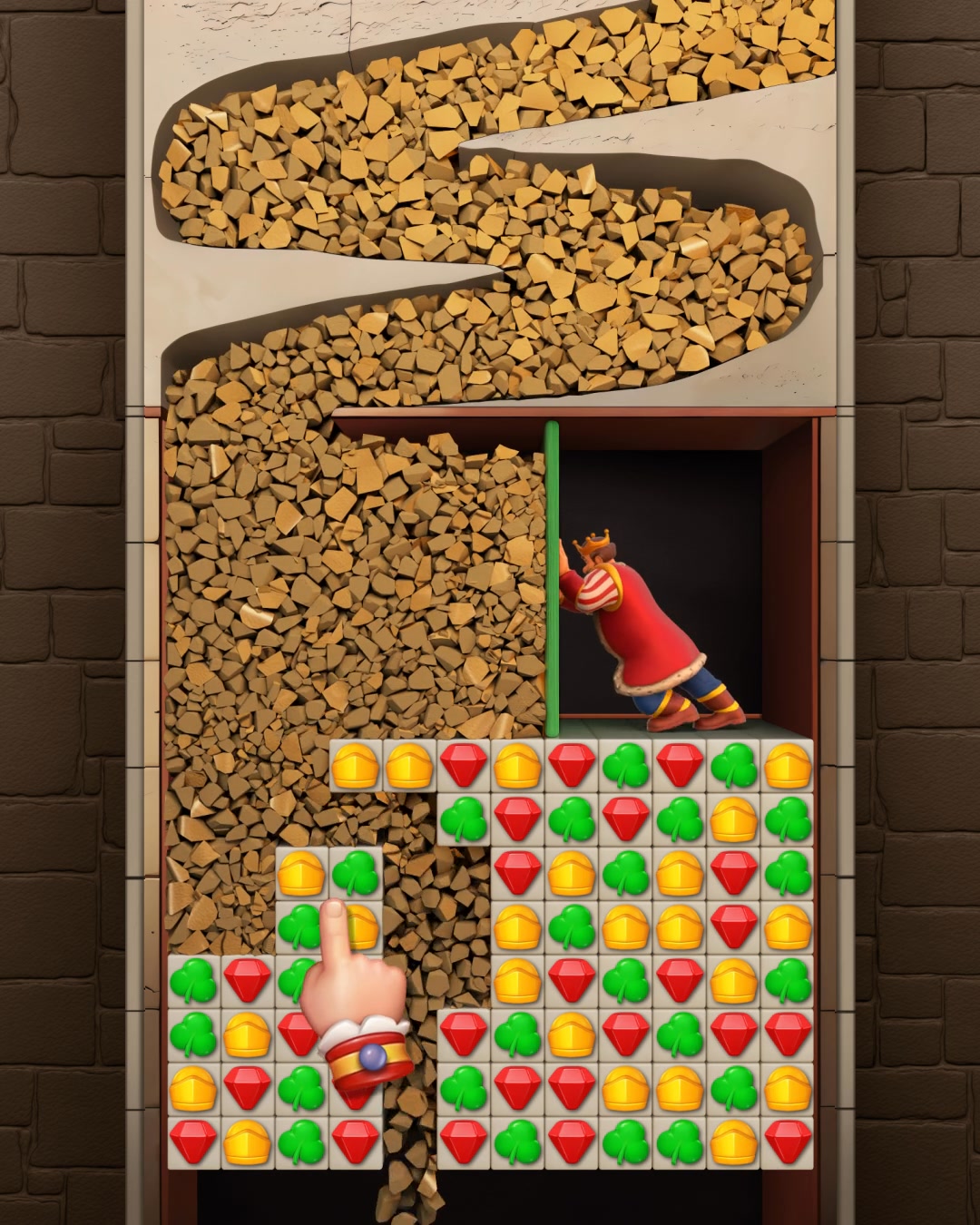
Royal Kingdom video poster displayed in Denote, recorded October 22. The resolved detail identified Instagram; the image is a source creative reference, not a measured gameplay result.
The useful mechanism is a visible problem paired with a candidate action. The viewer can start asking what move might change the situation before reading a long explanation.
That is an interpretation of the composition. We have not established that the scene accurately represents the full game or that the hook improved installs. Before adapting it, check whether your own game genuinely connects the shown action and consequence.
Original test idea: use the same authentic puzzle footage in two versions. One starts with the problem and board together; the other introduces the board before revealing the problem. Keep the promised outcome, later footage and destination consistent. This is a proposed comparison, not a test we ran.
2. Supremacy: establish the scenario before asking for action
The Supremacy: Call of War 1942 reference begins with a labelled map of Britain and a historical invasion scenario. The later sampled frame adds unit symbols, routes, effects and territorial colour to that map.
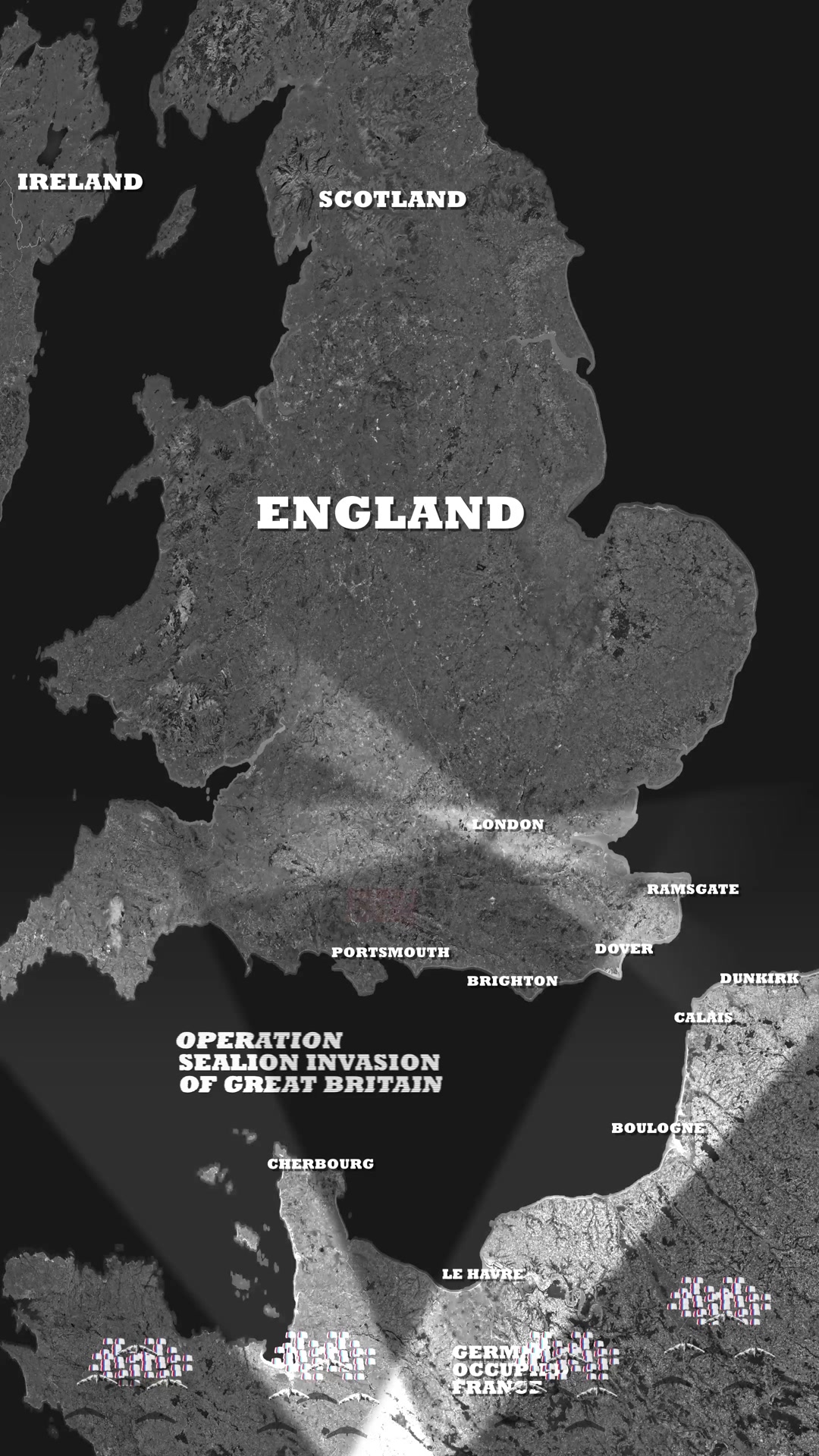
Original Supremacy video poster displayed in Denote, recorded October 22. The resolved detail identified Instagram.
This opening invites a different question: what would happen in this scenario? Place names and the map establish context rather than leading with an isolated reward or character.
For a strategy advertiser, the transferable decision is how much context the intended player needs. A recognisable map may introduce the fantasy efficiently for one audience; another may need an immediate example of the decision they will make. The source does not reveal which audience saw this execution.
Original test idea: introduce the same scenario with a map overview or a close-up of the first player decision. Use your own game environment and avoid implying that a cinematic map sequence is verified gameplay.
3. Tasty Travels: give the viewer a small task to follow
Tasty Travels: Merge Game opens on a fruit-filled play area with stones, an aiming guide and an order slip above the board. The later sampled frame shows a different fruit above the play area and a task card referring to clearing stones.
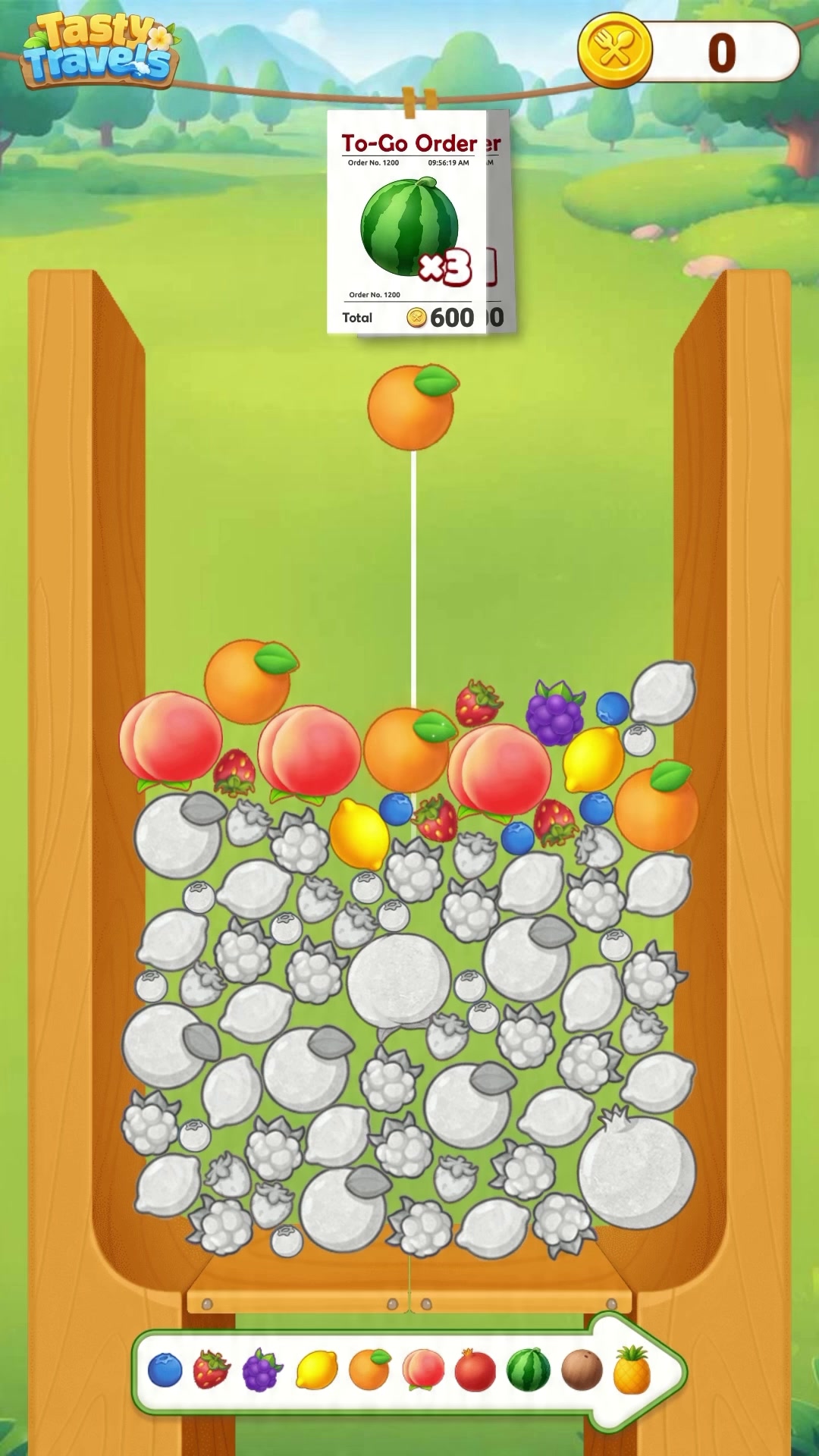
Original Tasty Travels video poster displayed in Denote, recorded October 22. The resolved detail identified Instagram.
The mechanism is a bounded task with a visible place to act. The order slip provides a goal, and the play area gives the viewer something concrete to follow.
This does not mean every game should add an order card. The useful question is whether your creative makes its next action and goal understandable. A different product might need a checklist, a before-state, or one clear input instead.
Original test idea: compare a task-first opening with an action-first opening, using the same genuine mechanic and later payoff. Do not change the entire story and call the result a hook test.
A practical ad hook comparison log
Keep the observation and your interpretation in different columns. This prevents an attractive reference from becoming an unsupported performance claim.
For your own research log, add the source link, capture date, platform shown in the resolved detail, format, language and the segment inspected. When you work with actual competitors, hold category and market scope stable. A global discovery chart is not a US-only competitor sample.
How to turn a reference into your next opening
Write the mechanism without the advertiser's assets
Replace names and surface details with the relationship between elements. “A recognisable problem and a possible solution appear together” can guide original production. “Use that king and those rocks” cannot.
If the idea stops making sense without the original character or artwork, you may have collected a distinctive execution rather than a reusable principle.
Keep the promise stable when comparing hooks
Write the proposition in one sentence before making variations. If version A promises a relaxing puzzle and version B promises a difficult challenge, the change reaches beyond the opening.
Label that as an angle comparison. Use the creative analysis worksheet when you need to inspect the promise, demonstration and destination together.
Check the handoff
Watch the opening without sound, then with sound when available. Note whether the next scene answers the opening question, changes the subject, or introduces a promise that the product cannot substantiate.
A screenshot can support a composition observation. It cannot establish a spoken line, sound effect, full story or completed demonstration. Leave those fields unknown until you inspect them.
Decide what would count as useful attention
For your own ads, opening engagement can help diagnose whether viewers stay. The final decision should also consider the intended action and downstream user quality. An opening that attracts curiosity but misrepresents the experience may produce attention your business does not want.
Set the decision rules before launch using the team's normal measurement process. This article makes no universal hook-rate threshold or minimum-budget recommendation.
FAQs
How long should an ad hook be?
Treat it as the opening needed to introduce the reason to keep watching. Plan the first frame and opening beats, then check that the next scene develops the same idea. A fixed number of seconds cannot replace that check.
Can I use the same hook on Facebook and TikTok?
You can test the underlying mechanism with an execution appropriate to each placement. Platform, sound, safe zones and audience context can change how the opening is understood. A reference detected on one platform does not establish results on another.
Does a long-running competitor hook prove it works?
Observed duration can make a reference worth investigating. It does not reveal acquisition costs, attribution, revenue or why the advertiser retained it.
Where should I begin in Denote?
Open Top Ads, choose a relevant Game or Tool view and completed week, and leave with one described opening and one original test question. For a named Facebook advertiser, Ad Spy provides another research entry point. Available data and access can vary.
Method disclosure: this AI-assisted editorial guide uses recorded Denote preview observations. Mechanism labels and test ideas are editorial interpretations; no campaign experiment or competitor outcome measurement is claimed.


