.jpg)
TL;DR:
- Renamed, not replaced. Advantage+ Shopping Campaigns became Advantage+ Sales Campaigns in early 2025 — same system, wider scope, no rebuild needed for existing campaigns.
- New since the rename: Opportunity Score, improved Andromeda match precision, Advantage+ Leads for lead-gen, and AI-generated creative variants.
- Thresholds that matter: 50+ conversions/week and $50-100+/day budget to exit the learning phase cleanly; 4-6+ fresh creatives refreshed every 2-4 weeks.
- Measure with blended MER and holdout tests, not platform ROAS alone — Advantage+'s broad targeting makes in-platform attribution less reliable.
- Choose manual campaigns instead for regulated industries, B2B lead-quality control, or accounts below the conversion-volume threshold.
- Research competitor creative before launch — what you feed the algorithm matters as much as how you configure it.
Meta renamed Advantage+ Shopping Campaigns to Advantage+ Sales Campaigns in early 2025, expanding it beyond pure e-commerce into leads and app installs. Since then, it's picked up an Opportunity Score, AI-generated creative variants, and a wider set of controls. This guide covers what changed, the AI features rolled out through 2025-2026, and a practical best-practices framework for running it in 2026.
What Happened to Advantage+ Shopping Campaign?
If you've been running Meta ads for a while and suddenly can't find "Advantage+ Shopping Campaign" in your objective list, you're not missing anything — it's been renamed.
In early 2025, Meta consolidated Advantage+ Shopping Campaigns into the broader Advantage+ Sales Campaigns structure. The change was about scope, not just branding: the original Advantage+ Shopping was purpose-built for e-commerce purchase events, while Advantage+ Sales extends the same automation — Advantage+ Audience, Advantage+ Placements, Advantage+ Creative, and Advantage+ Campaign Budget — to sales conversions more broadly, including leads and app installs under related Advantage+ campaign types.
For existing advertisers, the practical impact has been minimal. Campaigns that were already running under the old Advantage+ Shopping structure continued delivering under the new name without requiring a rebuild. What did change is what you'll see when creating a new campaign: the objective selector now shows "Sales" with Advantage+ features enabled by default, rather than a separate "Advantage+ Shopping Campaign" option.
If your team's internal documentation, dashboards, or reporting still reference "Advantage+ Shopping," it's worth a quick pass to align terminology — client-facing reports in particular tend to raise questions when the name in Ads Manager no longer matches what's in the deck.

New AI Features in 2025-2026
A few things changed under the hood beyond the name. Here's what's new since the rename:
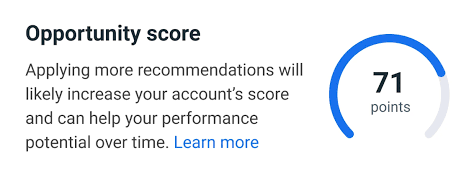
Opportunity Score. A 0-100 rating Meta now surfaces at the campaign level, meant to flag how well-configured a campaign is against Meta's recommended setup (creative volume, tracking, audience breadth). It's directionally useful as a checklist, though it shouldn't be treated as a performance guarantee — a high score reflects configuration hygiene, not predicted ROAS.
Andromeda retrieval upgrades. The underlying Andromeda ad-matching system (which powers ranking and delivery across Advantage+ products) has continued to improve match precision through 2025 and 2026, generally translating into better performance from the same creative volume rather than requiring more assets to see gains.
Advantage+ Leads expansion. Lead generation campaigns can now run under similar Advantage+ automation, extending what used to be a shopping/e-commerce-only toolset to B2B and service businesses collecting leads instead of direct purchases.
AI-generated creative variants. Meta's creative tools now auto-generate multiple variants (backgrounds, text overlays, aspect ratios) from a single uploaded asset, reducing the manual workload of hitting Advantage+'s recommended creative volume.
None of these are reasons to change your overall approach — they're refinements to the same system. The best-practices framework below still applies.
Advantage+ Sales Campaign Best Practices 2026
Budget Threshold and Learning Phase
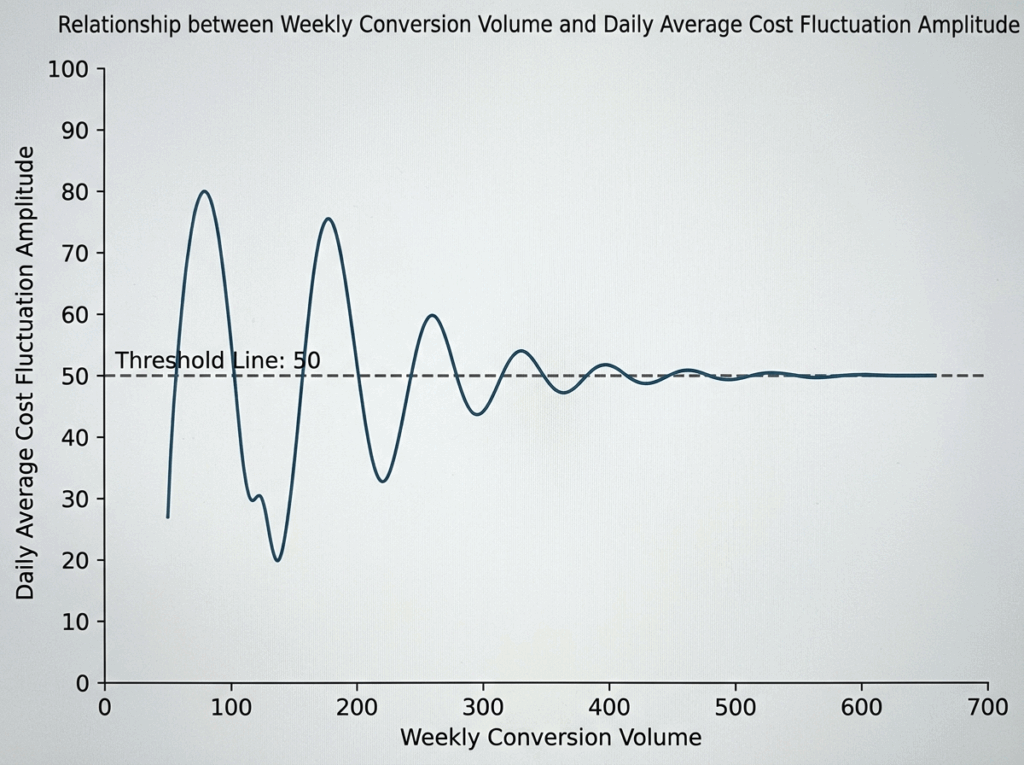
Advantage+ automation needs conversion volume to learn from. As a rule of thumb, accounts generating fewer than roughly 50 conversions a week tend to struggle to exit the learning phase cleanly, which shows up as inconsistent day-to-day costs. If your account is below that threshold, expect a rockier ramp-up — and budget for it rather than pulling the plug after a few unstable days.
On daily budget, Meta's own guidance points to a floor in the neighborhood of $50-$100/day depending on average order value; going meaningfully below that tends to starve the algorithm of the signal it needs.
Existing-Customer Budget Cap
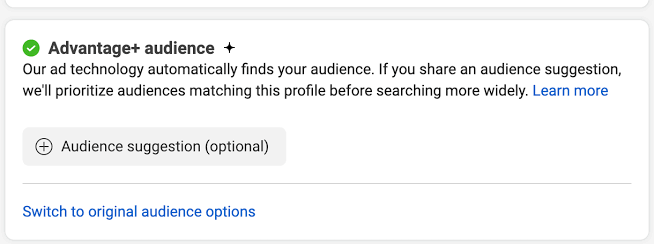
By default, Advantage+ Sales campaigns can spend a portion of budget targeting people who've already purchased from you — useful for some accounts, wasteful for others chasing pure new-customer acquisition. Setting an existing-customer budget cap (found in the audience controls) lets you put a ceiling on that spend without fully disabling Advantage+ Audience.
If new-customer acquisition is the entire point of the campaign, a low cap (or excluding existing customers via manual audience controls) is usually the right call. If retention and repeat purchases matter too, leaving more room here tends to perform better than manually excluding past purchasers outright.
Creative Supply
Advantage+ campaigns are creative-hungry. The general guidance is a minimum of 4-6 active ad variations per ad set, refreshed roughly every 2-4 weeks as performance starts to decline — creative fatigue shows up faster in Advantage+ structures than in manually targeted campaigns, since the algorithm is testing combinations across a wider audience pool.
Measurement: Blended MER Over Platform ROAS
Advantage+'s wider targeting makes single-platform ROAS a less reliable signal than it used to be — the algorithm optimizes across a broad pool, and attribution inside Ads Manager doesn't always reflect the incremental lift you're actually getting. Two things help:
- Blended MER (total revenue divided by total marketing spend, across all channels) gives you a cleaner read than in-platform ROAS alone.
- Holdout tests — geographic or audience-based — periodically confirm how much of the reported performance is actually incremental versus what would have happened anyway.
If you're not currently running either, that's usually a bigger lever on decision-making than any single settings tweak in this list.
Research Your Competitors' Creative Before You Launch
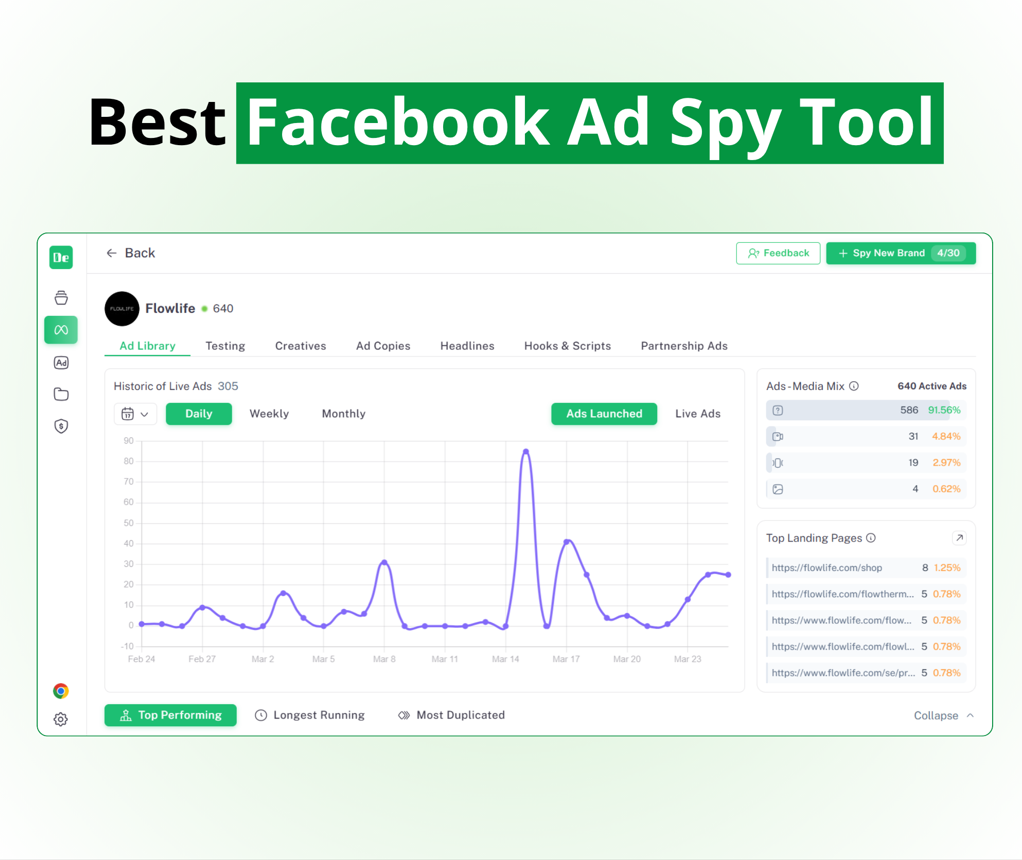
One thing best-practices lists tend to skip: what you actually put in front of Advantage+'s algorithm matters as much as how you configure it. Before launching, it's worth spending 15-20 minutes looking at what competitors in your category are currently running — which hooks, formats, and offers are showing up repeatedly (a signal they're working), and which angles nobody's tried yet.
This is exactly the kind of research a competitor ad library tool speeds up — pulling live ad creative from competitors across Meta and TikTok so you're not starting your Advantage+ creative rotation from a blank page. Tools like Denote let you save and organize that research directly, rather than screenshotting ads into a folder as you scroll.
Advantage+ Sales Campaign vs. Manual Campaigns: Which to Choose
A simple framework for the decision:
Lean Advantage+ Sales if:
- You're generating 50+ conversions/week already
- You can supply 4-6+ fresh creative variants and refresh them regularly
- Your business model tolerates some volatility in exchange for generally lower CPA
Lean manual (Conversions or Traffic objective) if:
- You're in a regulated industry (finance, housing, employment, healthcare) requiring auditable targeting decisions
- Lead quality control matters more than lead volume (common in B2B)
- You're below the conversion-volume threshold and need a stable audience to build on before handing control to automation
Plenty of accounts run both in parallel — Advantage+ for broad prospecting, a smaller manually-structured campaign for retargeting or a specific high-value segment where precision matters more than scale.
FAQ
How do I turn off Advantage+ Sales Campaign?
There's no single toggle — pausing the campaign, switching to a Conversions or Traffic objective, or manually restricting audience and placement settings are the three workarounds. We cover all three in detail here.
Is Advantage+ Shopping Campaign worth it?
For accounts with sufficient conversion volume and creative supply, generally yes — Meta's benchmarks show lower CPA versus manual structures for most e-commerce accounts. It's less clearly worth it for low-volume accounts or businesses needing tight targeting control.
Can I use Advantage+ for lead generation?
Yes. Advantage+ Leads extends the same automation to lead-gen objectives, though B2B advertisers should watch lead quality closely, since the algorithm optimizes primarily for volume unless you configure stronger qualifying signals.
What's the minimum budget for Advantage+ Sales Campaign?
There's no hard minimum, but daily budgets below roughly $50/day (and weekly conversion volume below ~50) tend to produce an unstable learning phase. Below that threshold, a manual campaign is usually easier to manage.
What's the difference between Advantage+ Shopping and Advantage+ Sales?
They're the same system. Meta renamed Advantage+ Shopping Campaigns to Advantage+ Sales Campaigns in early 2025 and widened its scope beyond pure e-commerce to include leads and app installs. Existing campaigns kept running without a rebuild.
What is Opportunity Score in Advantage+ Sales Campaign?
A 0-100 rating Meta shows at the campaign level, reflecting how closely your setup matches its recommended configuration (creative volume, tracking, audience breadth). Treat it as a setup checklist, not a guaranteed performance predictor.
How do I set an existing-customer budget cap?
It's in the audience controls of your ad set, under Advantage+ Audience settings. Setting a cap limits how much budget can go toward people who've already purchased, without fully disabling Advantage+ Audience.
Does Advantage+ Sales Campaign run on Facebook, Instagram, or both?
Both, by default, along with other Meta placements (Reels, Stories, Messenger) — Advantage+ Placements automatically distributes delivery across all of them unless you manually restrict which placements are eligible.
How many creatives do I need for Advantage+ Sales Campaign?
A minimum of 4-6 active ad variations per ad set is the general guidance, refreshed roughly every 2-4 weeks. Creative fatigue tends to show up faster here than in manually targeted campaigns.
Can I run Advantage+ Sales Campaign and a manual campaign at the same time?
Yes, and many accounts do — Advantage+ for broad prospecting alongside a smaller manually-structured campaign for retargeting or a specific high-value segment where precision matters more than scale.
Bottom Line
Advantage+ Shopping Campaign didn't go away — it became Advantage+ Sales Campaign, with a wider scope and a handful of new AI features layered on through 2025-2026. The core best practices haven't changed much: hit the conversion and creative thresholds, cap existing-customer spend deliberately, measure with blended MER instead of platform ROAS, and know what your competitors are already running before you launch. If your actual goal is scaling back the automation rather than optimizing it, here's how to do that. For a broader look at what the media-buying role looks like day to day, see our guide to optimize ad campaigns for a media buyer.


