
In the rapidly evolving digital landscape of 2026, patients no longer wait for referrals; they search for solutions. While organic SEO is a vital long-term marathon, Google Ads for doctors is the high-performance sprint that puts your clinic at the top of search results exactly when a patient is ready to book.
However, with rising CPCs (Cost Per Click) in the medical sector, running a campaign without a data-driven strategy is a recipe for wasted budget. By leveraging competitive intelligence tools like Denote, you can stay ahead of the curve. This guide provides a comprehensive google ads for doctors seo outline to help you lower your CPA and dominate your local market.
Why Google Ads is Non-Negotiable for Modern Medical Practices
Unlike broad-spectrum marketing, Google Ads allows you to target individuals displaying high-commercial intent. When someone searches for a "cardiologist near me," they aren't just browsing; they are looking for immediate intervention.
For specialized practices, such as those utilizing google ads for concierge doctors, the precision targeting of Google’s platform ensures you aren't paying for "window shoppers" but for patients who value premium, personalized care.
Capturing High-Commercial Intent
Marketing experts call it the "Zero-Moment of Truth." When a mother searches for a "pediatrician near me" at 2 AM or a professional athlete looks for "ACL surgery recovery," they aren't just browsing—they are ready to book. Appearing for these high-intent queries is exponentially more valuable than a billboard on a highway because the intent is already there. You aren't convincing them they need a doctor; you’re showing them why you are the right one.
Instant Visibility in Competitive Local Markets
Established hospitals often own the organic search results through sheer domain authority. For smaller private practices or specialized clinics, outranking a massive hospital for a keyword like "dermatologist in [City Name]" can take years of SEO work. Google Ads levels the playing field, allowing you to bypass the queue and sit at the very top of the page, even if your website is brand new.
The Ultimate Google Ads for Doctors SEO Outline
A successful medical campaign is built on data, not guesses. To maximize your ROI, your account must follow a rigorous structural outline.
Strategic Keyword Research: Beyond Generic Terms
Most clinics waste thousands of dollars on broad keywords like "doctor" or "pain relief." To win, you must go deep:
- Long-Tail Precision: Focus on condition-specific terms such as "non-surgical knee pain relief" or "google ads for concierge doctors." These terms have lower search volume but much higher conversion rates.
- The Power of Negative Keywords: This is your budget’s shield. You must filter out "jobs," "salary," "symptoms of," or "home remedies." You only want to pay for people looking for a provider, not a Wikipedia entry.
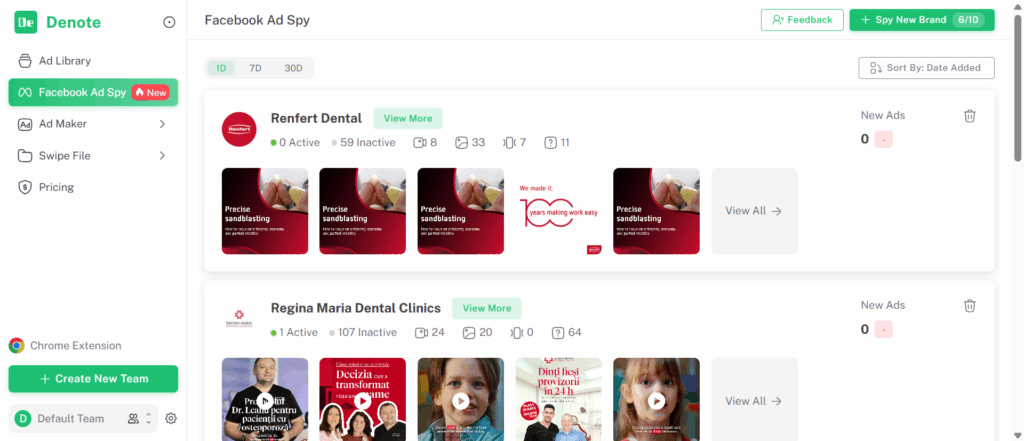
- This is the secret weapon. Instead of guessing which keywords to bid on, use Ad Spy tool to "spy" on the competitor advertising history. By analyzing the ad libraries of the top-performing clinics in your region, you can see which specific treatments they are pushing most aggressively. If a competitor has been running ads for "invisible braces" for six months straight, you know that keyword is a gold mine.
Campaign Structure: Organizing by Specialty & Treatment
One of the most expensive mistakes a medical practice can make is the "Single Campaign Trap"—dumping every service, from routine cleanings to complex oral surgeries, into one disorganized bucket. In the 2026 Google Ads auction, Google’s algorithm heavily favors Relevancy. If your account structure is messy, your Quality Score will plummet, and you will end up paying 50% more per click than the clinic across the street. To maximize your ROI, you must architect your account with the same precision you use in a clinical diagnosis.
Segment by Specialty: Strategic Budget Control
You must treat each medical specialty as a distinct business unit. Create separate Campaigns for categories like "General Dentistry," "Cosmetic Procedures," and "Emergency Care." This isn't just for organization; it’s for Budget Control.
For instance, an "Emergency Root Canal" patient has a much higher immediate value and urgency than someone looking for a "Routine Check-up." By separating these into different campaigns, you can allocate a higher aggressive budget to high-margin, urgent services while maintaining a steady, lower-cost spend on maintenance services. This prevents a surge in low-value "cleaning" searches from swallowing the budget you needed for high-value "dental implant" leads.
Align Ad Groups with Patient Pain Points
Within those campaigns, your Ad Groups must be hyper-focused on specific patient intent. This is where the concept of "Message Match" becomes critical. If a prospective patient searches for "professional teeth whitening," and your ad displays a generic headline like "Best Family Dentist in Town," they are likely to keep scrolling. Even if they do click, and you land them on a homepage filled with information about X-rays and pediatric care, they will bounce within seconds.
Instead, your "Teeth Whitening" Ad Group should feature:
- Ad Copy: Highlighting specific whitening results, duration, and safety.
- Dedicated Landing Page: A page focused exclusively on whitening transformations, pricing, and a clear "Book My Brightening" CTA.
The Denote Advantage: Visual Consistency Across Channels
To truly dominate, you need to look beyond the text. Before finalizing your Ad Group structure, use Denote to analyze how top-tier clinics are visually segmenting their offers on social media.
By using Denote, you can see which specific pain points are trending—perhaps "painless dentistry" is outperforming "affordable dentistry" in your area. You can then take these proven visual hooks and messaging themes from Facebook and mirror them in your Google Search Ad extensions and Landing Page headers. This cross-channel consistency, ensures that when a patient moves from a Google search to your site, they see the same high-converting messaging that is already winning on social platforms, drastically increasing your appointment booking rate.
Using Denote to Lower CPA and Outsmart Competitors
In 2026, search data is only half the story. To truly lower your Cost Per Acquisition (CPA), you need to understand the visual and psychological triggers that make a patient click.
Ad Creative Intelligence
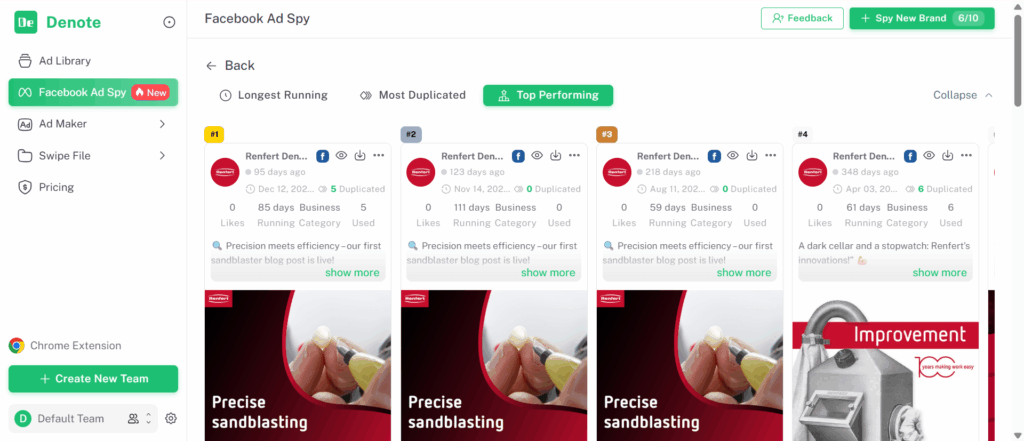
Google Ads are becoming more visual with Image Extensions and Video Ads. By leveraging Denote’s Ad Library, you can analyze the messaging of top-performing clinics across social platforms. What offers are they using? Are they offering "Free Consultations" or "Same-Day Appointments"? By seeing what wins on Facebook, you can write much more compelling Google Ad copy that resonates with your local demographic.
Competitor Spend & Timing Analysis
Use Denote to identify "Ad Gaps." These are specific times of the day or days of the week when your competitors' budgets are exhausted or turned off. By increasing your bids during these gaps, you can capture high-quality leads at a significantly lower CPC because the auction environment is less crowded.
Landing Page Optimization: Turning Clicks into Appointments
Landing Page Optimization: Turning Clicks into Confirmed Patients
In the high-stakes world of medical marketing, the ad gets the click, but the landing page gets the patient. You can have the most expensive Google Ads campaign in the world, but if your landing page feels "clinical" in the wrong way—cold, slow, or confusing—you are essentially burning money.
Building E-E-A-T in the YMYL Era
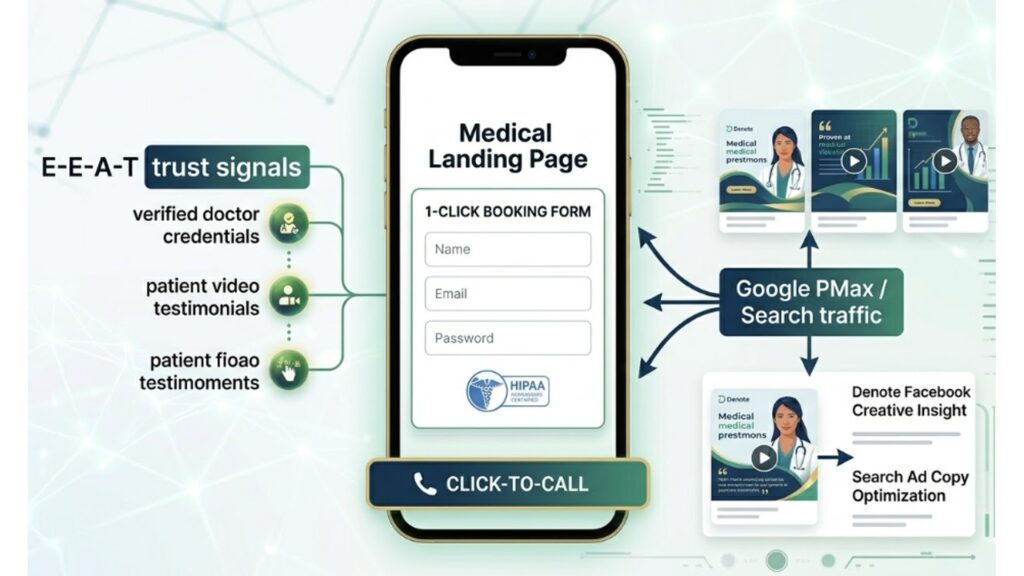
Medical advertising falls under Google’s strictest YMYL (Your Money Your Life) guidelines. By 2026, Google’s AI doesn't just scan for keywords; it scans for Trust Signals.
- Verified Credentials: Don't just list "Doctor." Display board certifications, years of specialized practice, and affiliations with recognized medical institutions prominently in the hero section.
- HIPAA Compliance & Privacy: Trust is fragile. Ensure every booking form and data entry point explicitly mentions HIPAA compliance. A simple "Your data is encrypted and secure" badge can increase conversion rates by up to 15%.
- The 2026 Social Proof Standard: Static text reviews are no longer enough. Video testimonials—where patients share their journey from pain to recovery—are 5x more effective than text.
Case: A concierge clinic in Miami replaced their text "Success Stories" with 30-second "Patient Spotlight" videos. Their booking rate jumped from 3.2% to 8.7% within one month.
Frictionless Conversion: The 3-Second Rule
If a patient has to click more than twice to book an appointment, you’ve lost them to the clinic next door. In 2026, 90% of medical searches occur on mobile devices. Your page must be designed for a thumb, not a mouse. Large "Click-to-Call" buttons and a persistent "Book Now" footer are mandatory. Furthermore, if your page takes more than 3 seconds to load, your bounce rate will skyrocket, and Google will punish your Quality Score, making your ads more expensive.
Measuring What Matters: ROI and Patient Acquisition Cost
Stop looking at "Impressions" and "Clicks." They are vanity metrics that don't pay the nurses or keep the lights on. To scale a medical practice, you must master the math of CPA (Cost Per Acquisition) and LTV (Lifetime Value).
Moving Beyond Vanity Metrics
Marketing without tracking is just gambling. You need to know exactly how much it costs to put one patient in a chair.
- The CPA Formula: If you spend $1,000 on Google Ads and generate 10 new patient appointments, your CPA is $100.
- The ROI Reality: For high-value procedures like dental implants, LASIK, or concierge retainers, an LTV might be $5,000 to $10,000. Paying $100 (CPA) to acquire $5,000 (LTV) is an incredible ROI.
Implementing Robust Conversion Tracking
Since 70% of medical appointments are still booked over the phone, traditional web tracking isn't enough. You must implement Dynamic Call Tracking. This technology swaps the phone number on your site based on the keyword the patient searched.
- Example: If Patient A found you through the keyword "emergency dentist" and Patient B found you via "teeth whitening," call tracking tells your front desk (and your Google Ads account) exactly which keyword triggered the call.
The Intelligence Layer: Cross-Channel Optimization with Denote
Before you set your CPA targets, use Denote to see what your competitors are willing to spend on their "hook." By using Ad Library, you can track how long a competitor has been running a specific high-value offer on Facebook. If you see a rival clinic running a "$99 New Patient Special" for six months, you can infer that their CPA-to-LTV ratio is healthy. You can then use this intelligence from Denote to adjust your Google Ads bidding strategy, ensuring you aren't overpaying while still capturing the most profitable leads in your zip code.
Google Ads vs. Facebook Ads: A Parallel Strategy for Patient Acquisition
In 2026, the most successful medical practices don’t rely on a single funnel; they build a cross-channel ecosystem. While your google ads for doctors seo outline focuses on "Demand Capture" (finding people who are already looking for you), Facebook and Instagram Ads are about "Demand Generation" (building trust before they even know they need you). To maximize your ROI, you must treat these not as rivals, but as a parallel tag-team.
Search Intent vs. Visual Interruption
The patient searching on Google is in "Action Mode." They have a toothache, they need an appointment, and they want it now. However, the patient scrolling through Facebook is in "Discovery Mode." They might have been considering a cosmetic procedure or a new concierge doctor for months but haven't taken the leap.
By using a parallel strategy, you capture the high-urgency patients on Google while using Facebook’s visual platform to "warm up" the local community. This multi-touchpoint approach ensures that when a patient eventually goes to Google to search for a specialist, your clinic’s name already carries a sense of brand familiarity and trust.
The Secret Sauce: Creative Synchronization
In a fragmented digital landscape, the biggest mistake a medical practice can make is working in silos. Traditionally, search marketers and social marketers never talked to each other. However, the most profitable clinics in 2026 use "Creative Synchronization" to bridge that gap and maximize every dollar spent on google ads for doctors.
Mining the "Winning Hook"
Before writing a single line of Google Ad copy, you should scan the social media ad landscape for the most engaging medical content in your niche. For example, if you notice a competitor’s video about "Painless Orthodontics" or "Same-Day Recovery" is generating massive engagement on social feeds, you’ve just found your "Winning Hook." You don't just hope it works—you take that proven psychological trigger and place it directly into your Google Ads headlines and descriptions.
Visual Retargeting for "Lost Leads"
A patient who clicks your Google Ad but doesn't book immediately is often a "lost lead"—unless you stay top-of-mind. By identifying high-converting visual assets used by the top 1% of clinics globally, you can launch a sophisticated social media retargeting campaign. This ensures that the patient who found you on Google continues to see your professional, high-end educational videos on their social feeds, building the trust necessary to finally book that appointment.
Conclusion: Build Your Practice Growth Engine
Winning in the medical space in 2026 requires a blend of search intent and creative intelligence. By following this google ads for doctors seo outline and utilizing tools like Denote to stay one step ahead of the competition, you can stop "hoping" for patients and start "scheduling" them.
Ready to see exactly what your competitors are doing to win over your patients?Try Denote today to uncover the ad strategies, creatives, and keywords that are driving the most profitable clinics in the country.
Pro Tips for 2026 Medical Marketing Success
To give your clinic an extra edge, keep these three expert tips in mind:
- Tip 1: Use the "Mirroring" Strategy. Before writing your Google search ads, use Spy Tool to check your competitor’s top-performing Facebook video ads. If they are focusing on "Painless Treatment" in their videos and getting high engagement, use that exact phrase in your Google Ad headlines. Mirroring proven social messaging on search platforms significantly boosts your click-through rates.
- Tip 2: Implement "Emergency" Bidding Schedules. If you offer urgent care or emergency dental services, increase your bids by 20-30% during late-night hours or weekends when other clinics are closed. Use Spy Tool to confirm when your competitors’ ads stop appearing so you can dominate the "After-Hours" market at a lower cost.
- Tip 3: Seasonal Creative Audits. Patient needs change with the seasons (e.g., flu shots in winter, allergy treatments in spring, or cosmetic procedures before summer). Use the historical data in Spy Tool to see what kind of "Seasonal Offers" your competitors ran last year. This allows you to prep your Google Ads and landing pages weeks before the peak demand hits.


